
Current Best Practice, Diagnosis, Treatment and Recovery
A detailed evidence-based clinical and public education reference
|
2026 UPDATE Reformulated from the supplied Neurohaven PTSD & Trauma material and updated against current UK and international guidance, systematic reviews and major clinical evidence. NICE NG116 was reviewed in April 2025 and remains current; this document is current to August 2026. |
Core evidence anchors
- · NICE NG116: Post-traumatic stress disorder — published 2018, surveillance review April 2025 (no update required).
· WHO mhGAP 2023 updated recommendations for psychological treatment of PTSD.
· VA/DoD 2023 Clinical Practice Guideline for PTSD and Acute Stress Disorder.
· WHO ICD-11 Clinical Descriptions and Diagnostic Requirements (2024) for PTSD and Complex PTSD.
· Recent systematic reviews and meta-analyses of psychotherapy, complex PTSD, trauma-informed care and assessment.
Scope and safety
This document is an educational reference for adults, families, clinicians and service designers. It does not diagnose an individual or replace a full clinical assessment. Trauma-related symptoms can overlap with depression, anxiety, grief, ADHD, autism, dissociation, substance use, psychosis, bipolar disorder, personality difficulties, sleep disorders, chronic pain and neurological or medical conditions. Urgent risk, safeguarding concerns, severe withdrawal, acute psychosis or mania, or immediate danger require appropriate emergency or specialist assessment.
1. What Trauma and PTSD Mean
Trauma is best understood carefully. A potentially traumatic event is an event involving actual or threatened death, serious injury or sexual violence, or another experience of an extremely threatening or horrific nature. A person can also be psychologically harmed by events that do not meet formal PTSD trauma criteria. The presence of distress after adversity is therefore important even when PTSD is not the correct diagnosis. [1–4]
Post-traumatic stress disorder (PTSD) is not simply “having experienced trauma”. It is a syndrome in which characteristic trauma-linked symptoms persist, cause clinically significant distress or impairment, and are not better explained by substances or another medical condition. Most people exposed to trauma do not develop chronic PTSD; natural recovery is common, particularly when safety and social support are restored. [1–4]
|
KEY DISTINCTION The event is not the diagnosis. PTSD requires a qualifying exposure plus a specific pattern of symptoms, duration and impairment. “Trauma-informed” care should not assume that every symptom is caused by trauma, and trauma exposure should not automatically be converted into a psychiatric diagnosis. |
Common potentially traumatic exposures
· Physical or sexual assault; domestic abuse; childhood abuse or neglect where exposure is extremely threatening or horrific.
· Serious road traffic or industrial accidents; fires; disasters; serious injury.
· War, combat, torture, captivity, terrorism, forced displacement and exposure to atrocities.
· Witnessing sudden violent death or serious injury; learning of violent or accidental trauma affecting a close person in circumstances meeting diagnostic criteria.
· Repeated occupational exposure to traumatic details, for example in some emergency, military, forensic or humanitarian roles.
· Traumatic childbirth, intensive care, life-threatening illness or medical procedures when the experience meets trauma criteria.
Bereavement, relationship breakdown, bullying, discrimination, workplace conflict, financial crisis and other severe stressors can cause substantial psychological suffering but do not automatically meet DSM-5-TR Criterion A for PTSD. Other diagnoses or formulations may be more appropriate depending on symptoms and context. [2,3]
Typical post-trauma reactions
In the first hours or days after a frightening event, intrusive memories, sleep disruption, emotional numbing, heightened startle, fear, irritability, concentration problems and avoidance can all occur without indicating a chronic disorder. Best practice is to provide safety, practical support, clear information about common reactions, and access to follow-up rather than pathologising normal acute responses. Routine compulsory psychological debriefing is not recommended. [1,4,12]
2. Epidemiology, Risk and Resilience
Trauma exposure is common worldwide, whereas PTSD is substantially less common. Prevalence varies by population, trauma type, sex/gender, conflict exposure, socioeconomic adversity, displacement and methodology. The risk is highest after interpersonal violence, sexual violence, torture, repeated childhood maltreatment and other events involving deliberate harm, entrapment or betrayal. [4,25]
Risk is probabilistic rather than deterministic. Important risk factors include greater trauma severity or repetition, prior trauma, previous mental disorder, low social support, ongoing threat, injury, displacement, poverty, sleep disturbance, comorbid depression or substance misuse, and adverse post-trauma environments. Protective factors include safety, social support, material stability, adaptive coping, access to healthcare, and restoration of meaningful roles. [4,12,25]
3. What Trauma Does to the Brain and Body — and What Neuroscience Cannot Tell Us
PTSD is biologically grounded, but there is no single brain scan, blood test, hormone level, EEG signature or genetic panel that diagnoses PTSD in an individual. Neurobiological findings are group-level associations with substantial overlap between people with and without PTSD. They should therefore be used to explain mechanisms, not to “prove” or disprove an individual diagnosis.
Threat, salience and memory networks
Research repeatedly implicates amygdala-centred threat processing, hippocampal and contextual memory systems, medial prefrontal/anterior cingulate regulation, insula/salience networks and large-scale connectivity. On average, some studies find increased threat-related amygdala responses, altered prefrontal regulation and smaller hippocampal volume in PTSD. However, effect sizes are heterogeneous, causality is complex, and some differences may pre-date trauma or reflect comorbidity, medication, sleep, alcohol, childhood adversity or other factors. Statements such as “trauma shrinks the hippocampus” or “the amygdala is permanently stuck on” are oversimplifications. [26]
Autonomic and endocrine systems
PTSD can involve persistent changes in arousal, sleep, sympathetic/parasympathetic balance and hypothalamic-pituitary-adrenal (HPA) signalling. Cortisol findings are not simply “high cortisol”: studies show context-dependent and sometimes lower basal cortisol patterns alongside altered stress reactivity and glucocorticoid feedback. This is another reason to avoid simplistic hormone explanations. Physical symptoms such as palpitations, sweating, breathlessness, gastrointestinal symptoms, pain and fatigue are common, but medical causes should still be assessed where indicated.
|
NEUROSCIENCE IN PRACTICE Use neuroscience to normalise understandable threat-learning and memory processes, not to make deterministic claims. The clinically useful message is that learned threat responses and trauma memories can change through evidence-based treatment; the brain is plastic, and recovery is possible. |
4. Diagnosis: DSM-5-TR, ICD-11, Acute Stress Disorder and Complex PTSD
DSM-5-TR PTSD: clinical structure
DSM-5-TR requires exposure to actual or threatened death, serious injury or sexual violence through specified routes, followed by symptoms in four clusters: intrusion; avoidance; negative alterations in cognition and mood; and alterations in arousal/reactivity. Symptoms persist for more than one month, cause clinically significant distress or impairment, and are not attributable to a substance or medical condition. Dissociative and delayed-expression specifiers may apply. [2,5]
|
DSM-5-TR domain |
Clinical examples |
|
Exposure |
Direct exposure, witnessing, certain learning about trauma to a close person, or repeated/extreme occupational exposure to aversive details. |
|
Intrusion |
Unwanted trauma memories, trauma-related dreams, dissociative reactions/flashbacks, marked distress or physiological reactivity to reminders. |
|
Avoidance |
Avoidance of internal memories/feelings or external reminders associated with the trauma. |
|
Negative cognition/mood |
Trauma-related amnesia, persistent negative beliefs, distorted blame, persistent negative emotion, reduced interest, detachment, reduced positive emotion. |
|
Arousal/reactivity |
Irritability/aggression, reckless behaviour, hypervigilance, exaggerated startle, concentration difficulty, sleep disturbance. |
|
Duration/impact |
More than one month, with significant distress or functional impairment; exclude substance/medical causation. |
ICD-11 PTSD
- ICD-11 uses a deliberately narrower core syndrome: re-experiencing the event in the present, deliberate avoidance, and a persistent sense of current threat, together with significant functional impairment. The ICD-11 approach is not simply a shorter DSM checklist; it conceptualises a more focused core disorder. [3]
Complex PTSD (ICD-11)
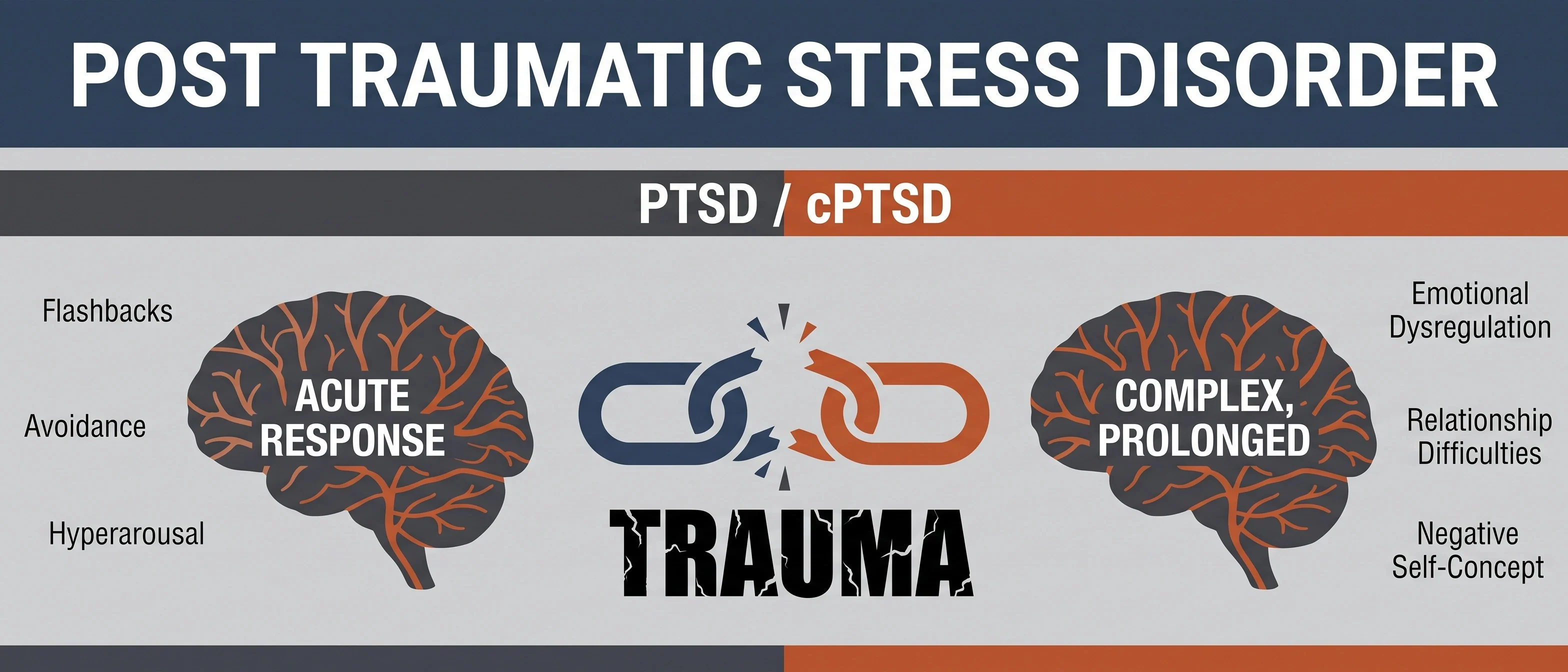
ICD-11 Complex PTSD (CPTSD) requires the core PTSD syndrome plus persistent disturbances in self-organisation (DSO): affect dysregulation, a persistent negative self-concept, and persistent difficulties sustaining relationships or feeling close to others. Exposure is typically prolonged or repetitive and difficult or impossible to escape, but the diagnosis is based on the clinical syndrome rather than on trauma type alone. CPTSD is a distinct ICD-11 diagnosis; DSM-5-TR does not have a separate CPTSD category. [3,17,18]
|
Feature |
PTSD |
Complex PTSD (ICD-11) |
|
Core trauma symptoms |
Re-experiencing, avoidance and current threat (ICD-11); broader four-cluster model in DSM-5-TR. |
All ICD-11 PTSD requirements are met. |
|
Affect regulation |
May be disturbed but is not necessarily pervasive. |
Persistent problems with emotional hyperactivation or hypoactivation. |
|
Self-concept |
Trauma-related guilt or negative beliefs may occur. |
Persistent beliefs of being diminished, defeated or worthless, often with shame/guilt/failure. |
|
Relationships |
Detachment or avoidance may occur. |
Persistent difficulty sustaining relationships or feeling close to others. |
|
Typical trauma context |
Any qualifying trauma. |
Often prolonged/repetitive interpersonal trauma, captivity, torture or chronic abuse; context supports but does not by itself diagnose. |
|
Classification |
DSM-5-TR and ICD-11. |
ICD-11; not a separate DSM-5-TR diagnosis. |
Acute Stress Disorder (DSM-5-TR)
Acute Stress Disorder (ASD) applies to a trauma-related syndrome occurring from 3 days to 1 month after trauma and requires a specified number of symptoms across intrusion, negative mood, dissociation, avoidance and arousal. It is not simply “PTSD before one month”: the symptom-counting structure differs. ASD increases later PTSD risk but is neither necessary nor sufficient for PTSD; many people with ASD recover and some people later develop PTSD without having met ASD criteria. [5]
5. High-Quality Clinical Assessment
A good PTSD assessment is not a questionnaire score. It integrates trauma exposure, symptom phenomenology, timing, functional impairment, differential diagnosis, comorbidity, risk, safeguarding, physical health, substance use and the person’s own goals. Screening tools can support but do not replace clinical judgement. [1,5,19,20]
Recommended assessment components
· Clarify the potentially traumatic event(s), chronology, direct/witnessed/learned/occupational route, and whether symptoms are linked to a qualifying event.
· Assess intrusion/re-experiencing, avoidance, mood/cognitive change, hyperarousal/current threat and dissociation in detail, including triggers and functional impact.
· Assess duration, onset and course, including delayed expression and symptom fluctuation.
· Assess sleep, nightmares, pain, physical symptoms, alcohol/drugs, prescribed medicines, caffeine and other contributors to arousal.
· Assess depression, panic/anxiety, OCD, psychosis, bipolar disorder, grief, dissociative disorders, ADHD/autism and personality-related difficulties where clinically relevant.
· Assess self-harm, suicide risk, aggression, domestic abuse, exploitation, safeguarding, housing and ongoing threat. Safety planning should be proportionate to risk.
· Assess strengths, supports, culture, spiritual context, work/education, relationships, parenting/caring roles and the person’s treatment preferences.
· For CPTSD, assess all three DSO domains and do not infer the diagnosis from “complex trauma” alone.
Structured instruments
|
Instrument |
Use |
Important limitation |
|
CAPS-5 |
Clinician-administered structured DSM-5 PTSD assessment; widely regarded as a gold-standard research/clinical interview. |
Requires training and time; DSM-5 framework, not ICD-11 CPTSD. |
|
PCL-5 |
20-item DSM-5 self-report screen and symptom-severity/monitoring measure. |
A high score is not by itself a definitive diagnosis. |
|
LEC-5 |
Life Events Checklist to support systematic trauma-exposure inquiry. |
Does not determine whether an event meets full Criterion A without clinical clarification. |
|
International Trauma Questionnaire (ITQ) |
Brief self-report measure for ICD-11 PTSD and CPTSD; useful for symptom profile and monitoring. |
Should support, not replace, comprehensive clinical assessment; subscale psychometrics continue to be refined. |
|
International Trauma Interview (ITI) |
Clinician-administered assessment developed for ICD-11 PTSD/CPTSD. |
Availability/training may vary; evidence base is developing. |
The PCL-5 can be useful for screening and tracking change, but the US National Center for PTSD explicitly identifies structured clinical interview as the diagnostic gold standard. Recent meta-analytic work on the ITQ supports the broad PTSD/DSO structure while also highlighting the value of comprehensive assessment rather than over-reliance on brief subscales. [18–20]
6. Differential Diagnosis, Comorbidity and Complex Needs
PTSD commonly co-occurs with depression, anxiety, substance use, chronic pain, sleep problems and other mental disorders. Diagnostic overlap is expected; the task is to identify the best explanation for each symptom and the degree to which conditions are independent, interacting or secondary to PTSD.
|
Potential overlap |
Questions that help differentiate |
|
Depression |
Is low mood pervasive beyond trauma reminders? Are anhedonia, guilt, hopelessness and biological symptoms independent of re-experiencing/avoidance? |
|
Panic disorder / GAD |
Are panic attacks unexpected and uncued? Is worry broad and future-oriented rather than predominantly trauma-linked? |
|
OCD |
Are intrusive thoughts ego-dystonic obsessional fears with compulsions, rather than involuntary trauma memories or flashbacks? |
|
ADHD |
Were attentional/executive symptoms present developmentally before the trauma, across settings? PTSD-related concentration problems usually have a post-trauma course. |
|
Autism |
Are social/sensory/repetitive patterns lifelong neurodevelopmental traits rather than acquired avoidance, detachment or hypervigilance? |
|
Bipolar disorder |
Are there distinct episodes of elevated/irritable mood with increased energy and other manic symptoms, rather than chronic hyperarousal/insomnia? |
|
Psychosis |
Are hallucinations/delusions occurring outside flashbacks/dissociative states? Is reality testing impaired? Trauma-linked voices can occur and require careful phenomenology. |
|
Dissociative disorders |
Assess depersonalisation, derealisation, amnesia, identity disturbance and whether dissociation exceeds PTSD specifier phenomena. |
|
Prolonged grief disorder |
Is persistent yearning/preoccupation with the deceased the central syndrome rather than threat-based trauma symptoms? Both can co-occur. |
|
Personality disorder |
Assess longstanding patterns predating trauma where possible; avoid mislabelling adaptive trauma responses as fixed personality pathology. |
Comorbid substance use
Do not automatically exclude a person from PTSD treatment because of alcohol or drug misuse. NICE recommends not excluding people on this basis alone. Treatment planning should assess intoxication/withdrawal risk, overdose risk, medication interactions, capacity to attend safely, and whether integrated or coordinated treatment is needed. Severe dependence or unstable withdrawal risk may need priority management, but trauma-focused work should not be indefinitely withheld solely because substance use exists. [1]
7. Best-Practice Treatment Principles
- · Shared decision-making: explain effective options, likely benefits, burdens, risks, accessibility and patient preference.
· Prioritise evidence-based trauma-focused psychological therapy for most people with PTSD when clinically appropriate.
· Do not require the person to disclose every detail before treatment is offered; assessment should be sufficient for safe formulation and treatment selection.
· Address ongoing danger, safeguarding, unstable housing, severe substance withdrawal, acute mania/psychosis and urgent suicide risk as clinically required.
- · Use measurement-based care where possible: track PTSD severity, functioning, sleep, depression and treatment goals rather than relying on vague impressions.
· Do not interpret transient distress during trauma-focused therapy as evidence that the treatment is harmful. A 2024 meta-analysis found no evidence of overall mid-treatment symptom exacerbation relative to controls, while recognising that individuals still need monitoring and pacing. [23]
· Adapt duration and pacing for multiple traumas, dissociation, neurodevelopmental needs, disability, language, cultural context and cognitive difficulties without diluting the active ingredients of treatment.
· Plan for endings, relapse prevention, anniversaries, future stressors and re-engagement if symptoms recur.
8. Evidence-Based Psychological Treatments for Adults
Across major guidelines and large meta-analyses, trauma-focused psychological therapies have the strongest and most consistent evidence. A 2023 network meta-analysis of 157 randomised trials found psychological therapies effective overall, with trauma-focused CBT showing advantages over non-trauma-focused approaches at short-, mid- and long-term follow-up. Another network meta-analysis found CPT, EMDR, cognitive therapy, NET, PE and CBT among effective treatments. [6,7]
|
Treatment |
Evidence/status |
What it involves / notes |
|
Trauma-focused CBT / Cognitive Therapy for PTSD |
First-line / strong guideline support |
Trauma-memory processing plus work on meanings, avoidance, arousal, shame/guilt and re-engagement with life. |
|
Cognitive Processing Therapy (CPT) |
First-line / strong evidence |
Structured work on trauma-related beliefs and “stuck points”; may include written material depending on protocol. |
|
Prolonged Exposure (PE) |
First-line / strong evidence |
Imaginal and in-vivo exposure to safely reduce avoidance and update threat learning. |
|
Narrative Exposure Therapy (NET) |
Guideline-supported |
Constructs a chronological life narrative; particularly useful where there are multiple traumatic events and in some refugee/conflict settings. |
|
EMDR |
First-line / strong evidence |
Trauma-memory processing with bilateral stimulation within a validated protocol. Mechanism is debated, but clinical efficacy is supported. |
|
Supported trauma-focused digital CBT |
Evidence-based option for selected adults |
NICE supports validated, practitioner-supported programmes in suitable adults without severe dissociation or significant risk. |
|
Present-centred / non-trauma-focused therapy |
Can reduce symptoms; generally not preferred over trauma-focused treatment when the latter is acceptable |
May be useful when a person is not ready for trauma processing, or as a preference-sensitive alternative where supported by local guidance. |
|
Group trauma-focused CBT |
Evidence-supported in some guidelines/settings |
Can improve access and peer support, but individual treatment may be preferable for some trauma types or privacy needs. |
EMDR: correcting a common misconception
EMDR is not simply “moving the eyes to rewire the brain”. It is a structured psychotherapy with preparation, assessment, trauma-memory activation, bilateral stimulation and cognitive/emotional processing. The contribution of eye movements/bilateral stimulation to mechanism is an active research question; the clinical outcome evidence is stronger than any single mechanistic explanation. [1,4,6,7]
Treatment dose and pacing
NICE advises validated trauma-focused CBT delivered by trained, supervised practitioners, typically over 8–12 sessions, with more sessions when clinically indicated, for example after multiple traumas or with complex needs. Treatment should include psychoeducation, management of arousal/flashbacks, safety planning, memory processing, work on trauma-related emotions and meanings, reduction of avoidance, and restoration of functioning. [1]
9. Medication: What Is Supported, What Is Limited, What to Avoid
Psychological treatment is generally preferred as first-line treatment for PTSD when available and acceptable. Medication is reasonable when the person prefers pharmacotherapy, has important comorbidity, cannot access or engage in effective psychotherapy, or needs symptom reduction as part of a broader plan. Medication should be reviewed for benefit, adverse effects, adherence and continuing need. [1,8]
|
Medication/approach |
Current evidence and best-practice position |
|
Sertraline / Paroxetine |
Among the best-supported SSRIs for PTSD; both have regulatory approval for PTSD in the US, and historically UK authorisation has included these agents. NICE advises considering an SSRI such as sertraline when the adult prefers drug treatment. |
|
Venlafaxine |
Supported by guideline evidence; NICE advises considering venlafaxine or an SSRI if drug treatment is preferred. VA/DoD also supports venlafaxine. |
|
Fluoxetine and other antidepressants |
May be clinically useful, particularly for comorbid depression/anxiety, but strength of PTSD-specific recommendation varies by guideline and evidence set. |
|
Prazosin |
Not recommended as monotherapy for overall PTSD by VA/DoD, but may be considered specifically for PTSD-related nightmares; evidence is mixed. Monitor blood pressure and orthostatic symptoms. |
|
Benzodiazepines |
Do not use as routine PTSD treatment. VA/DoD strongly recommends against them; risks include dependence, cognitive effects, falls, interaction with alcohol/opioids and possible interference with effective psychotherapy. |
|
Antipsychotics |
Not routine PTSD treatment. NICE allows specialist consideration of an antipsychotic such as risperidone only as an adjunct to psychological therapy for disabling refractory symptoms such as severe hyperarousal or psychotic symptoms. VA/DoD is more restrictive for routine augmentation/monotherapy because evidence is weak and harms matter. |
|
Mood stabilisers / anticonvulsants |
Not routine PTSD treatment unless there is a separate indication (for example bipolar disorder or epilepsy). Evidence for PTSD itself is limited or negative for several agents. |
|
Ketamine / esketamine |
Ketamine is not an established PTSD treatment; VA/DoD suggests against ketamine for PTSD monotherapy. It may have separate indications for depression in some jurisdictions, requiring specialist assessment. |
|
Cannabis/cannabinoids |
Not an evidence-based PTSD treatment; avoid presenting cannabis as a therapeutic substitute. Potential harms include dependence, cognitive effects, anxiety/paranoia and interaction with comorbidity. |
|
Sleep medicines |
Treat specific sleep disorders according to evidence and diagnosis. CBT-I is preferable for chronic insomnia where feasible. Sedating medication should not substitute for trauma treatment and must be reviewed for risk. |
|
MEDICATION BOTTOM LINE The old “medication toolbox” approach — adding sedatives, antipsychotics, beta-blockers or mood stabilisers symptom by symptom — is not best practice for routine PTSD. Prefer a small number of evidence-supported treatments, target clearly defined comorbidity when present, and avoid polypharmacy without a strong rationale. |
Nightmares and sleep
Nightmares and insomnia deserve active treatment because poor sleep worsens arousal, mood, cognition and quality of life. Assess obstructive sleep apnoea, restless legs, substance use, medication effects and circadian disruption. Trauma-focused therapy often improves sleep, but residual insomnia may benefit from CBT-I. Prazosin can be considered for trauma-related nightmares in selected adults despite mixed trial results; explain uncertainty and monitor hypotension. [8]
10. Complex PTSD: Current Treatment Approach
CPTSD should be treated as a clinically complex but treatable condition, not as a reason to postpone effective trauma therapy indefinitely. NICE recommends allowing extra time to build trust and addressing barriers such as dissociation, emotional dysregulation, substance misuse, interpersonal difficulties and unstable circumstances. [1]
- Historically, many clinicians used a mandatory phased model: stabilisation/skills first, trauma processing second, reintegration third. Skills-based phases such as STAIR can be valuable for some patients, especially when affect regulation or relational instability is a major barrier. However, recent evidence does not support a universal rule that everyone with CPTSD must complete a lengthy stabilisation phase before trauma-focused treatment. A 2026 systematic review/meta-analysis found no clear superiority of phase-based over non-phase-based treatment across most outcomes, although some multi-phase approaches may offer advantages for PTSD or affect regulation. Recent randomised trials similarly show that direct PE can be effective in childhood-abuse-related CPTSD. [21,22,24]
|
BEST-PRACTICE CPTSD FORMULATION Use phased care when it solves a specific clinical problem — not because the label “complex PTSD” automatically demands it. The goal is readiness and safety sufficient for effective treatment, while avoiding unnecessary therapeutic delay. |
11. Children and Young People
Assessment must be developmentally informed. Children may show behavioural reenactment, trauma-themed play, regression, irritability, sleep problems, separation difficulties, concentration problems, somatic complaints or avoidance that is not verbally articulated. Caregiver functioning and safety are central, but caregiver involvement should be tailored where the caregiver is implicated in the trauma or is otherwise unsafe.
WHO 2023 recommends psychological interventions for children and adolescents with PTSD, including individual trauma-focused CBT, group trauma-focused CBT and EMDR, with moderate certainty overall. NICE recommends trauma-focused CBT approaches and specifically advises against drug treatment for prevention or treatment of PTSD in people under 18. [1,11]
· Use developmentally appropriate psychoeducation and emotional-regulation skills.
· Involve a safe caregiver where appropriate, including support for caregiver responses and parenting.
· Address school functioning, peer relationships, safeguarding and ongoing exposure to abuse or violence.
· Avoid assuming “bad behaviour” is deliberate; but equally avoid attributing every behaviour to trauma without differential assessment.
· Do not use medication as routine PTSD treatment in children and young people; treat separate comorbid disorders according to their own evidence base.
12. Immediate and Early Post-Trauma Care
What to do
· Ensure physical safety, urgent medical care and safeguarding.
- · Provide calm, practical support: information, basic needs, contact with supportive people, housing/financial/legal assistance where relevant.
· Normalize common short-term reactions without predicting that PTSD will develop.
· Offer follow-up and monitor people with severe or persistent symptoms, high-risk exposures or limited support.
· For adults with Acute Stress Disorder or clinically important PTSD symptoms within the first month, NICE recommends individual trauma-focused CBT interventions such as CPT, cognitive therapy for PTSD, NET or PE. [1]
What not to do routinely
Do not provide compulsory single-session psychological debriefing to everyone exposed to trauma. Universal debriefing has not been shown to prevent PTSD and may be unhelpful or harmful in some contexts. Do not offer medication, including benzodiazepines, specifically to prevent PTSD. Psychological First Aid-style practical and emotional support is preferable to forced recounting. [1,12]
13. Trauma-Informed Care
Trauma-informed care (TIC) is an organisational and interpersonal approach intended to increase safety, choice, trust and collaboration and to reduce re-traumatisation. It is not the same as trauma-focused treatment: a service can be trauma-informed without delivering PTSD psychotherapy, and a person may need evidence-based PTSD treatment in addition to trauma-informed care.
Core principles
· Physical and emotional safety.
· Trustworthiness, clarity and transparency.
· Choice, consent and control wherever possible.
· Collaboration and attention to power differences.
· Empowerment, strengths and recovery orientation.
· Peer support where useful and wanted.
· Cultural humility, accessibility and awareness of historical and structural adversity.
· Workforce support, supervision and prevention of vicarious trauma/burnout.
- An important evidence nuance: trauma-informed care is widely endorsed as a framework, but the evidence for specific organisational models and measurable clinical outcomes is less mature than the evidence for trauma-focused psychotherapy. A 2025 AHRQ systematic review found major heterogeneity in definitions and implementation, with a developing but still incomplete effectiveness evidence base. It is therefore best presented as a quality-of-care framework, not as a proven stand-alone treatment for PTSD. [16]
14. Adjunctive, Digital and Emerging Treatments
|
Approach |
2026 evidence position |
|
Mindfulness / yoga / relaxation |
Can help stress, arousal and wellbeing for some people and may be useful adjuncts. They should not be portrayed as equivalent replacements for first-line trauma-focused therapy when PTSD is established. |
|
Exercise |
Beneficial for general physical and mental health and may reduce PTSD/depressive symptoms as an adjunct. Individualise for disability, pain and medical risk. |
|
Somatic therapies / sensorimotor approaches |
Some patients find body-focused work helpful, but the evidence base is less established than for TF-CBT/EMDR. Avoid claims that trauma is literally “stored in the body” as a settled biological fact. |
|
Art/music/dance therapies |
Potentially useful adjuncts for expression, engagement and quality of life; evidence for stand-alone PTSD remission is limited compared with first-line therapies. |
|
Virtual reality exposure |
A technologically delivered form of exposure with evidence in some populations, especially military trauma; not clearly superior to established trauma-focused therapy and availability is limited. |
|
Neurofeedback |
Promising research signals but not established first-line care; protocols and evidence remain heterogeneous. |
|
Acupuncture / massage |
May support relaxation or symptom management for some people; do not present as established PTSD treatment. Touch-based interventions require explicit consent and trauma sensitivity. |
|
Service animals |
Can improve functioning and perceived safety for some people, but are supports rather than treatments that process traumatic memories. |
|
Digital trauma-focused interventions |
Supported/remote trauma-focused CBT has a growing evidence base and is guideline-endorsed in selected adults; clinician support, risk screening and programme quality matter. |
|
MDMA-assisted therapy |
Investigational. FDA did not approve the 2024 application and requested further evidence. In August 2026, a resubmitted US application was reported, but the treatment is not an established approved standard of PTSD care. Trial findings are promising but must be weighed against methodological, safety, blinding and therapist-conduct concerns. |
|
Psilocybin / other psychedelics |
Experimental for PTSD. Evidence is much less mature than for established therapies, and risks include acute anxiety, cardiovascular effects, perceptual disturbance and destabilisation in vulnerable people. |
|
Ketamine |
Not established PTSD treatment; research continues, but current major PTSD guidance does not support routine ketamine monotherapy for PTSD. |
15. Recovery, Self-Management and Relapse Prevention
Self-management supports treatment but should not become a message that the person must “heal themselves”. The most useful strategies are practical, repeatable and compatible with the person’s culture, disability, finances and living circumstances.
· Build or restore safe social connection. Quality and reliability matter more than the size of the network.
- · Protect sleep: consistent routines, reduced intoxication-based sleep strategies, assessment for sleep disorders and CBT-I where appropriate.
- · Use grounding during flashbacks or dissociation: orient to date/place, notice current sensory information, move the body, use a rehearsed reminder that the memory is not the present.
· Use paced breathing, relaxation or mindfulness if helpful; stop or adapt techniques that intensify dissociation or distress.
· Reduce avoidance gradually through an agreed treatment plan. Avoidance provides short-term relief but can maintain PTSD by preventing corrective learning.
· Maintain physical activity within medical limits; address pain, nutrition and physical health alongside mental health.
· Monitor alcohol/drug use and seek support early if substances are becoming the main method of emotional regulation.
- · Rebuild valued roles: work, study, creativity, relationships, parenting, volunteering, spirituality or community participation.
· Plan for anniversaries, legal proceedings, media exposure, contact with perpetrators, medical procedures or other predictable triggers.
- · Use a relapse plan: personal warning signs, helpful strategies, contact points and criteria for re-entering treatment.
Grounding: a practical example
- A simple grounding sequence is: name where you are and the date; press both feet into the floor; identify five things you can see and several things you can hear or feel; slow the exhale; and repeat a brief present-focused statement such as “this is a memory; the event is not happening now.” The popular 5-4-3-2-1 method is one option, not a mandatory protocol. Grounding should be personalised and practised when calm.
16. Culture, Inequality and Special Populations
PTSD occurs across cultures, but symptom expression, meaning, help-seeking and treatment acceptability vary. Some people communicate distress mainly through physical symptoms, spiritual or moral language, anger, shame or family concerns rather than psychiatric terminology. Cultural formulation should therefore ask how the person and their community understand what happened and what recovery means, rather than assuming one universal narrative. [4]
· Use qualified interpreters rather than relying on children or family members for sensitive trauma disclosure.
· Consider racism, discrimination, migration status, asylum processes, poverty, homelessness and ongoing community violence as active stressors, not merely “background”.
· For refugees and survivors of torture, coordinate psychological treatment with legal, housing, medical and social support where possible.
· For military personnel, veterans and emergency workers, assess moral injury, guilt, grief, occupational identity and barriers to disclosure while still applying standard diagnostic criteria.
· For sexual and domestic violence survivors, prioritise choice, privacy, safeguarding and practical safety; avoid pressuring disclosure.
· For neurodivergent people, adapt communication, sensory environment, pacing and formulation; distinguish developmental traits from trauma-acquired changes.
· For pregnancy/perinatal trauma, consider birth trauma, loss, neonatal intensive care, bonding, sleep deprivation and medication/reproductive issues within specialist perinatal care where needed.
17. Practical Evidence Summary
|
Clinical question |
Best-supported answer |
|
What is first-line for adult PTSD? |
Individual trauma-focused psychotherapy — including trauma-focused CBT approaches such as CPT, cognitive therapy, PE or NET, and EMDR — selected through shared decision-making. |
|
Do all trauma-exposed people need therapy? |
No. Natural recovery is common. Offer practical support and monitoring; target early intervention to clinically important symptoms/high risk rather than compulsory universal debriefing. |
|
Can questionnaires diagnose PTSD? |
They can screen and monitor. Diagnosis requires clinical assessment; structured interviews such as CAPS-5 are gold-standard tools for DSM-5 PTSD. |
|
Does a brain scan prove PTSD? |
No. Neuroimaging findings are group-level and non-specific. |
|
Is medication first-line? |
Usually not over trauma-focused psychotherapy when the latter is available and acceptable. SSRIs such as sertraline/paroxetine and venlafaxine have the strongest medication evidence. |
|
Should benzodiazepines be used? |
Not routinely; major guidance recommends against them for PTSD. |
|
Does CPTSD require months of stabilisation before trauma therapy? |
No universal rule. Skills/stabilisation may help selected patients, but recent evidence supports individualised direct or phased trauma-focused care. |
|
Is prazosin a general PTSD treatment? |
No. It may help selected patients with PTSD-related nightmares; evidence is mixed, and it is not recommended as monotherapy for overall PTSD by VA/DoD. |
|
Are antipsychotics routine augmentation? |
No. NICE allows specialist adjunctive use only in selected severe refractory cases; other guidance is more restrictive. |
|
Is MDMA-assisted therapy established care in 2026? |
No. It remains investigational; the 2024 FDA application was not approved and a resubmission was reported in August 2026. |
|
Does trauma-informed care equal PTSD treatment? |
No. TIC is a service framework that improves safety/choice/collaboration; PTSD still requires evidence-based assessment and treatment when present. |
18. References and Further Reading
- National Institute for Health and Care Excellence (NICE). Post-traumatic stress disorder (NG116). Published 5 Dec 2018; last reviewed 8 Apr 2025. nice.org.uk ↗
- American Psychiatric Association. Diagnostic and Statistical Manual of Mental Disorders, Fifth Edition, Text Revision (DSM-5-TR). Washington, DC: APA; 2022.
- World Health Organization. Clinical descriptions and diagnostic requirements for ICD-11 mental, behavioural and neurodevelopmental disorders. Geneva: WHO; 2024.
- World Health Organization. Post-traumatic stress disorder: fact sheet; and mhGAP evidence centre recommendations for PTSD psychological interventions, updated 2023.
- U.S. Department of Veterans Affairs, National Center for PTSD. DSM-5 PTSD diagnostic criteria; Acute Stress Disorder; CAPS-5 and PCL-5 assessment resources.
- Mavranezouli I, et al. Psychological treatments for post-traumatic stress disorder in adults: a network meta-analysis. Psychological Medicine. 2020;50:542–555. PMID 32063234.
- Comparative effectiveness of psychotherapies in adults with posttraumatic stress disorder: network meta-analysis of 98 RCTs. Psychological Medicine. 2023. PMID 36628572.
- Department of Veterans Affairs / Department of Defense. VA/DoD Clinical Practice Guideline for Management of Posttraumatic Stress Disorder and Acute Stress Disorder. Version 4.0; 2023 (edited publication 2024).
- Jericho B, et al. The efficacy and acceptability of psychological interventions for adult PTSD: a network and pairwise meta-analysis of randomized controlled trials. J Consult Clin Psychol. 2023;91:445–461. PMID 37141033.
- International Society for Traumatic Stress Studies (ISTSS). Prevention and Treatment Guidelines for PTSD; adult prevention and early-treatment resources.
- World Health Organization. PTSD psychological interventions — children and adolescents. mhGAP evidence centre, 2023 update.
- ISTSS. Adult Prevention and Early Treatment for PTSD. Guidance on universal interventions and psychological debriefing.
- NICE. April 2025 surveillance of post-traumatic stress disorder (NG116). Surveillance decision: no update required.
- Cloitre M, et al. The International Trauma Questionnaire: development of a self-report measure of ICD-11 PTSD and complex PTSD. Acta Psychiatr Scand. 2018;138:536–546. doi:10.1111/acps.12956.
- Cloitre M, et al. The International Trauma Questionnaire measures reliable and clinically significant treatment-related change in PTSD and complex PTSD. Eur J Psychotraumatol. 2021;12:1930961. PMID 34211640.
- Nguyen-Feng VN, et al. Trauma Informed Care: A Systematic Review. AHRQ Comparative Effectiveness Review No. 25-EHC007; 2025. PMID 40373174.
- Karatzias T, et al. Validation of post-traumatic stress disorder and complex PTSD using the International Trauma Questionnaire. Acta Psychiatr Scand. 2017. PMID 28696531.
- Kindred R, et al. Evaluating the ICD-11 PTSD and Complex PTSD Constructs: A Meta-Analytic Confirmatory Factor Analysis of the International Trauma Questionnaire. Assessment. 2026;33:510–532. doi:10.1177/10731911251340837.
- U.S. Department of Veterans Affairs, National Center for PTSD. Clinician-Administered PTSD Scale for DSM-5 (CAPS-5). Updated 2026.
- U.S. Department of Veterans Affairs, National Center for PTSD. PTSD Checklist for DSM-5 (PCL-5). Updated 2026.
- Phase-based versus non-phase-based psychological interventions for complex PTSD: a systematic review and meta-analysis. 2026. PMID 41949043.
- Comparing phase-based treatment, prolonged exposure, and skills-training for Complex Posttraumatic Stress Disorder: a randomized controlled trial. 2023. PMID 37871452.
- Purnell L, et al. A systematic review and meta-analysis of PTSD symptoms at mid-treatment during trauma-focused treatment for PTSD. J Anxiety Disord. 2024;107:102925. doi:10.1016/j.janxdis.2024.102925.
- Phase-based treatment versus immediate prolonged exposure for childhood abuse-related PTSD: the role of emotion regulation improvement in predicting PTSD symptom reduction. 2026. PMID 42140099.
- Koenen KC, et al. Posttraumatic stress disorder in the World Mental Health Surveys and related global epidemiological literature. Use alongside WHO epidemiology because prevalence varies substantially by population and trauma type.
- ENIGMA-PGC and related large-scale neuroimaging literature on PTSD: hippocampal, amygdala and cortical findings are group-level associations with heterogeneity and are not diagnostic biomarkers.
- Lykos Therapeutics. Complete Response Letter for midomafetamine capsules for PTSD, 9 Aug 2024; FDA requested additional evidence. Subsequent reports in Aug 2026 state that Resilient Pharmaceuticals resubmitted an NDA; regulatory review remains ongoing.
- MAPS. Response to report of progress for MDMA-assisted therapy for PTSD with FDA. 10 Aug 2026. This is a stakeholder source and should be interpreted alongside independent regulatory reporting.
- Blackie M, et al. Digital-Based Interventions for Complex Post-Traumatic Stress Disorder: A Systematic Literature Review. Trauma Violence Abuse. 2024;25:3115–3130. doi:10.1177/15248380241238760.
- NICE. Recommendations for research: trauma-informed approaches, personalisation and complex PTSD. NG116 evidence programme.
Editorial Notes on the 2026 Update
The supplied Neurohaven source already covered definitions, neurobiology, DSM-5 PTSD, Acute Stress Disorder, Complex PTSD, psychotherapy, medication, trauma-informed care, coping and cultural perspectives. This revision retains that educational breadth while replacing informal web sources with guideline/research anchors, removing duplicated material, correcting language and spelling, and updating areas where the earlier text had become inaccurate or too confident. The most material changes include:
· Neurobiology reframed as probabilistic group-level science rather than deterministic “brain damage” or biomarker claims.
· Addition of a structured assessment and differential-diagnosis section, including CAPS-5, PCL-5 and ITQ.
· Complex PTSD aligned with ICD-11 and updated 2026 treatment evidence; mandatory prolonged stabilisation is no longer presented as universal best practice.
· Medication section tightened around guideline-supported options; benzodiazepines, antipsychotics, mood stabilisers, ketamine and other off-label agents are no longer presented as routine symptom-by-symptom treatment.
· Prazosin described specifically as a possible nightmare treatment rather than a general PTSD medicine.
· Early intervention distinguishes targeted trauma-focused CBT for clinically important symptoms from ineffective universal debriefing.
· Trauma-informed care explicitly distinguished from trauma-focused PTSD treatment, with its organisational evidence base described more cautiously.
· MDMA-assisted therapy updated from “on track for FDA approval” to its actual 2026 investigational/regulatory status.
· Stronger coverage of children, substance use, sleep, risk, culture, neurodiversity, refugee/torture contexts and recovery planning.
|
PUBLICATION NOTE For public-facing web publication, the reference list can be shortened to “Key sources” while retaining the numbered evidence citations in an expandable references section. For clinician-facing publication, keep the full references and add local referral/emergency information appropriate to the jurisdiction. |