
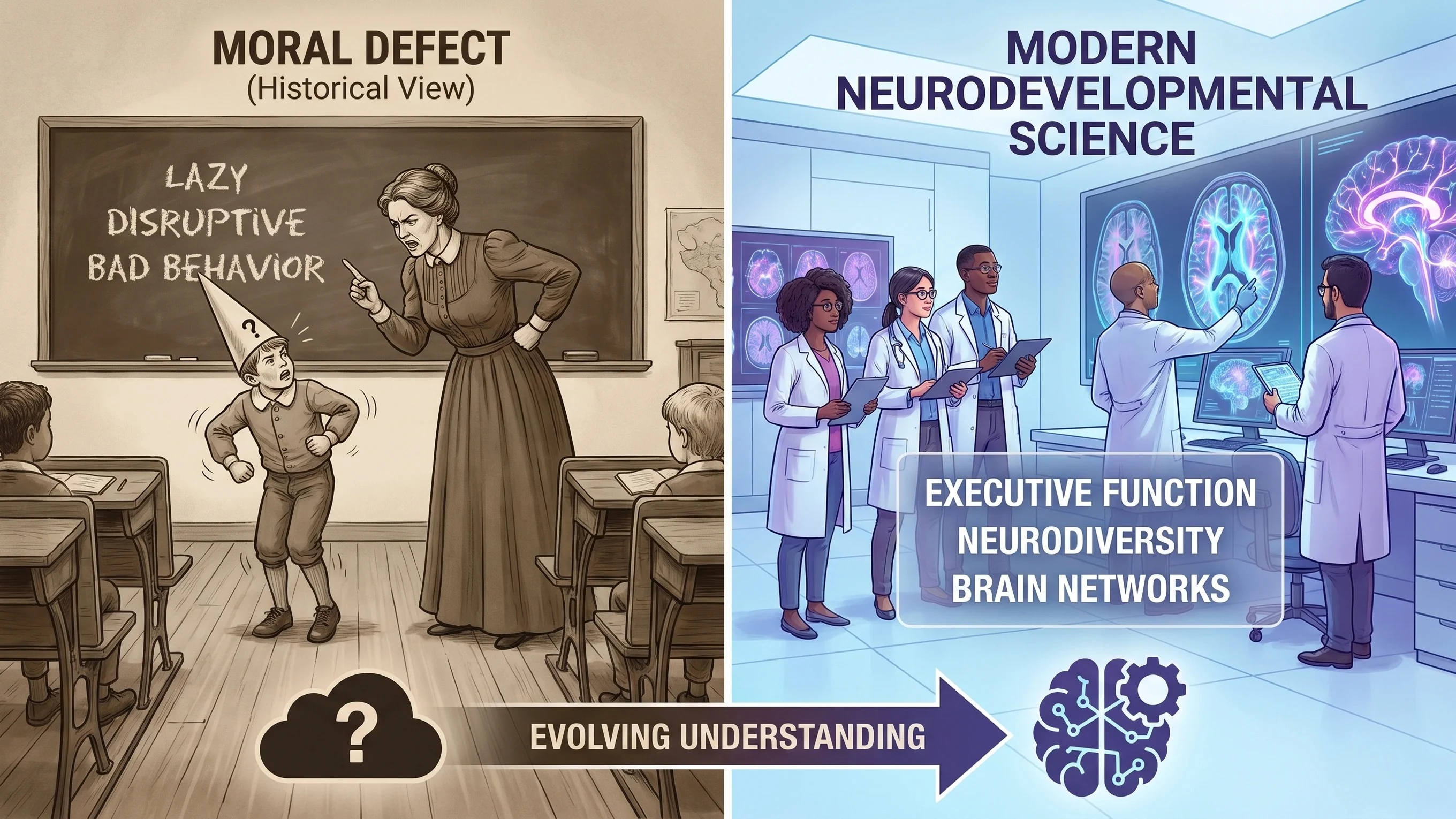
From ‘Moral Defect’ to Modern Neurodevelopmental Science
Attention-deficit/hyperactivity disorder has undergone one of the most striking transformations in modern psychiatry. Over little more than a century, the same broad pattern of difficulties has been interpreted as a problem of moral behaviour, brain injury, childhood hyperactivity, defective attention, impulse control and, eventually, neurodevelopment.
Today, ADHD is understood as a heterogeneous, highly heritable neurodevelopmental condition that can persist throughout life, affecting far more than the ability to sit still or concentrate. It can influence executive functioning, time management, motivation, emotional regulation, relationships, education, work, driving, finances, sleep, physical health and vulnerability to other mental-health and substance-use problems.
Yet the story is not simply one of scientists gradually “discovering ADHD”. The diagnosis itself has changed as researchers have changed the questions they ask.
- The history of ADHD is therefore also a history of psychiatry: a movement from judging behaviour from the outside towards understanding development, cognition, brain function, genetics and lived experience.
Before ADHD Had a Name
Behaviours recognisable today as ADHD did not suddenly appear in the twentieth century.
Historical medical and literary accounts contain descriptions of people who were unusually distractible, restless, impulsive or inconsistent in their ability to sustain effort. Retrospectively diagnosing historical individuals is scientifically unreliable, but these accounts undermine the idea that ADHD-like behaviour is simply a product of smartphones, modern schooling or twenty-first-century lifestyles. Reviews of the early literature have identified descriptions resembling modern ADHD long before the diagnostic term existed.

One frequently mentioned example is the German physician Melchior Adam Weikard, who in the eighteenth century described people with strikingly poor sustained attention. Other early writers described restless and impulsive children. These accounts were observations rather than modern diagnoses, but they show that the underlying behavioural phenotype has a much longer history than the terminology used to describe it.
1902: George Frederic Still and the Beginning of the Clinical Story
The conventional starting point for the medical history of ADHD is usually Sir George Frederic Still, a British paediatrician who delivered his Goulstonian lectures in 1902.
Still described children who displayed severe problems with behavioural control despite apparently normal intelligence. His language reflected Edwardian medicine and social attitudes. He described a problem involving a “defect of moral control”.
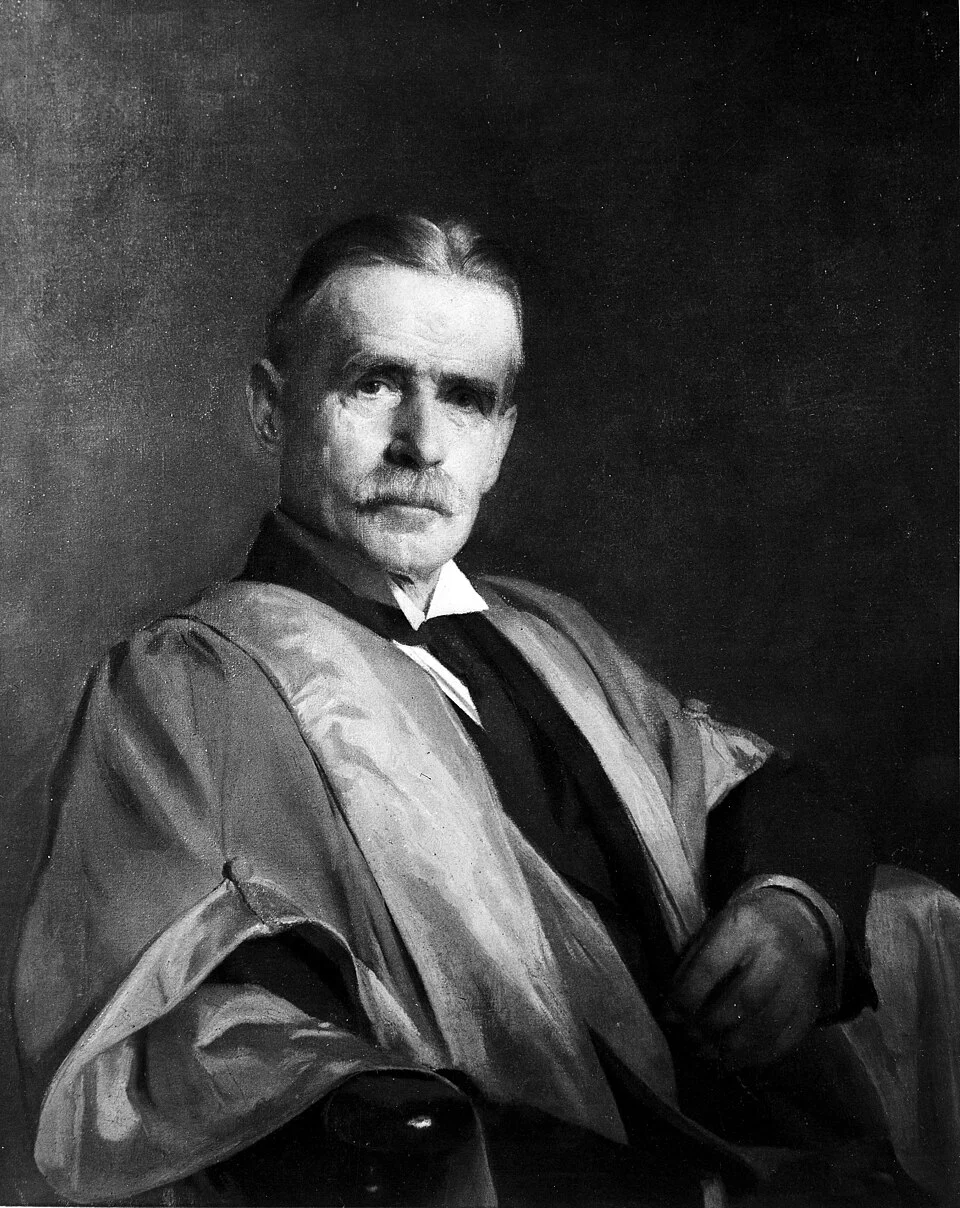
That phrase sounds extraordinary today. However, Still was making an observation that was actually progressive for his time: some children seemed genuinely unable to regulate their behaviour adequately rather than merely choosing to misbehave.
He also recognised that these difficulties could exist in the absence of intellectual disability and could arise without an obvious major neurological disease.
His descriptions included features resembling modern concepts of impulsivity, poor persistence, excessive activity and difficulty regulating behaviour. They subsequently became incorporated into theories of brain injury and, much later, ADHD.
The interpretation, however, remained fundamentally different from today's.
What modern psychiatry sees as self-regulation and executive-function difficulties, early twentieth-century medicine frequently viewed through concepts of willpower, discipline and moral behaviour.
That distinction matters. Throughout ADHD's history, the observed behaviour has often remained recognisable while the explanation for it has repeatedly changed.
The Encephalitis Era: Was Hyperactivity Evidence of Brain Damage?
A major change followed the encephalitis epidemics of the early twentieth century.
Some children surviving encephalitis developed dramatic changes in behaviour including hyperactivity, impulsiveness, emotional instability and poor concentration.
The obvious conclusion was that disruptive and hyperactive behaviour might result from brain injury.
During subsequent decades, similar behavioural syndromes became associated with terms including
|
brain-injured child syndrome |
|
minimal brain damage |
and eventually...
minimal brain dysfunction
The word minimal was important. Clinicians increasingly encountered children who behaved as though they had neurological dysfunction but showed no obvious major structural brain lesion.
- This led to an awkward hypothesis: perhaps the damage was present but simply too subtle for contemporary medicine to detect.
By the mid-twentieth century, “minimal brain dysfunction” had become a broad umbrella covering hyperactivity, attention problems, learning difficulties, motor coordination problems and perceptual abnormalities.
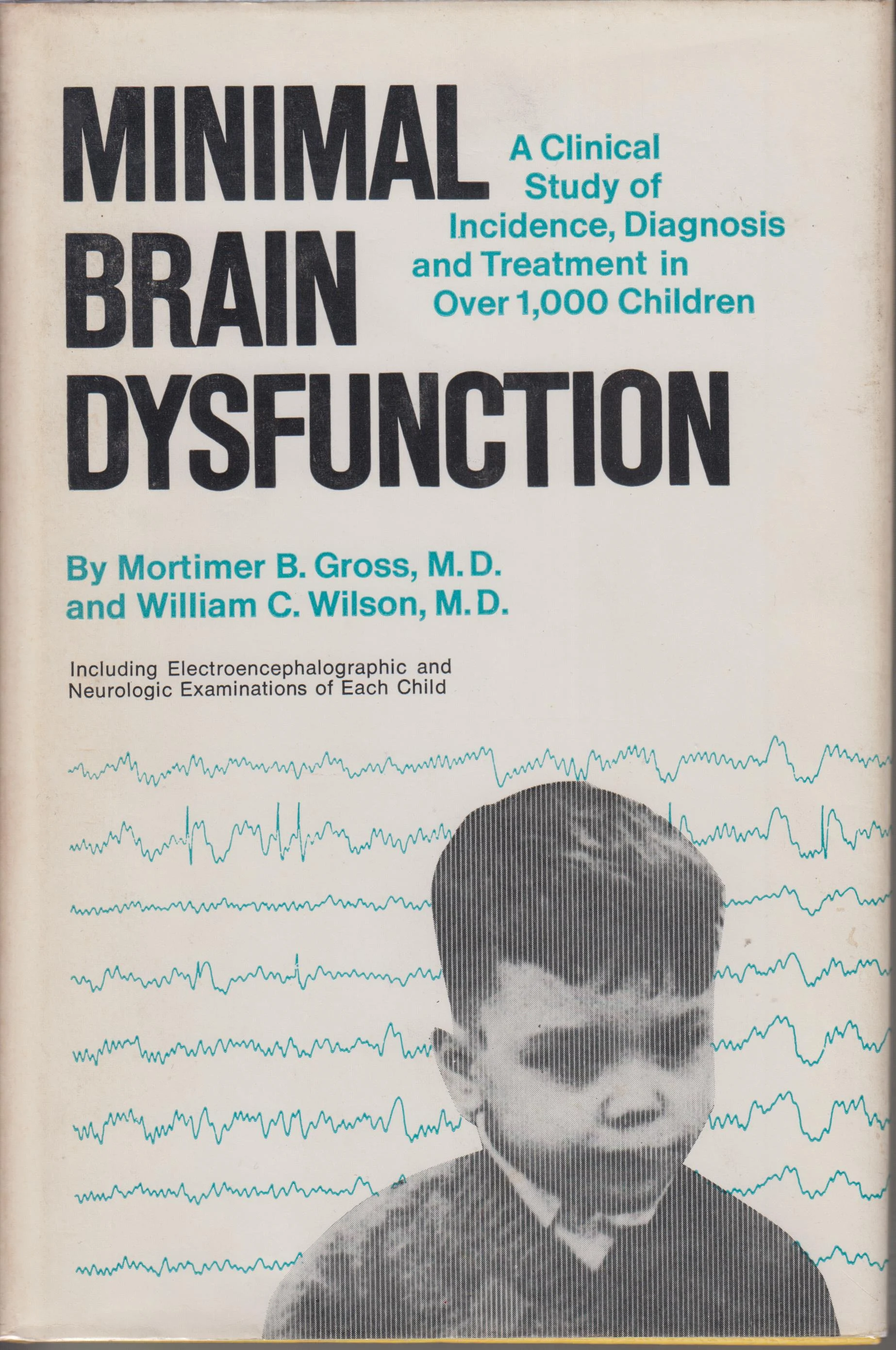
We now know that ADHD is not adequately explained as minor acquired brain damage. Nevertheless, this period represented an important conceptual shift.
The child was becoming less likely to be viewed simply as badly behaved and more likely to be viewed as having a biologically based difficulty in regulating behaviour.
1937: The Accidental Discovery of Stimulant Treatment
One of the most remarkable events in ADHD history occurred almost by accident.
In 1937, American physician Charles Bradley gave Benzedrine, an amphetamine preparation, to children undergoing neurological assessment. He noticed something unexpected.
Some children became better able to concentrate, complete schoolwork and regulate their behaviour.
This was counterintuitive. Why would a stimulant reduce disruptive behaviour?
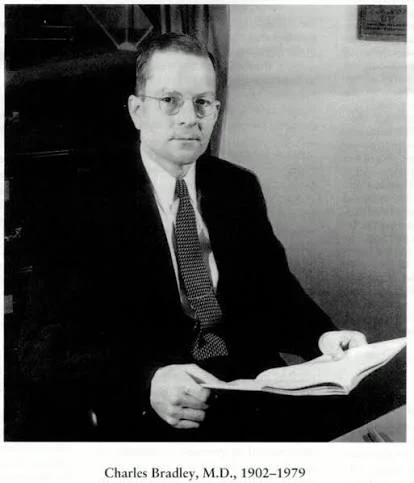
The discovery preceded the modern ADHD diagnosis by decades, yet it established one of psychiatry's most enduring pharmacological observations: catecholaminergic stimulant drugs can substantially improve attention and behavioural regulation in many people with ADHD.

Methylphenidate followed later and became widely used during the 1950s and 1960s.
The medication response did not prove what ADHD was, but it helped change how clinicians thought about it. Behavioural dysregulation increasingly appeared to involve underlying brain systems rather than simply motivation or discipline.
The 1950s and 1960s: The “Hyperactive Child”
Eventually, the concept of invisible brain damage became increasingly difficult to defend.
Most affected children had no demonstrable neurological lesion.
Attention therefore shifted away from presumed damage and towards the observable syndrome itself.
- Terms such as:
|
hyperkinetic impulse disorder |
|
hyperactive child syndrome |
• and hyperkinetic reaction of childhood
became increasingly prominent.
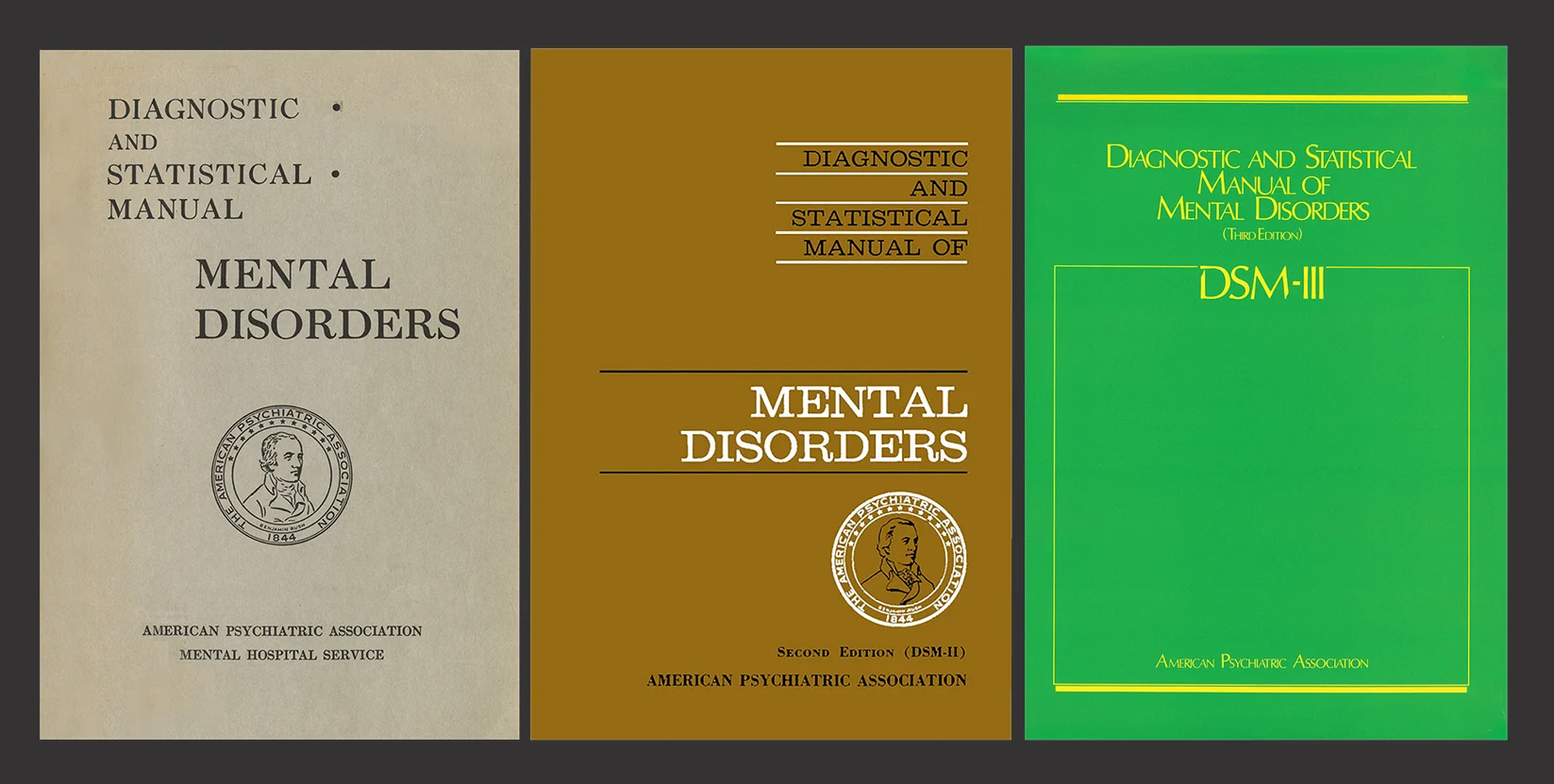
The DSM-II, published in 1968, included Hyperkinetic Reaction of Childhood.
- The emphasis was unmistakable: hyperactivity.
The stereotypical patient was a young, disruptive, physically restless boy.
This historical emphasis would have profound consequences.
Children who daydreamed, procrastinated, forgot instructions, lost possessions or struggled internally with organisation—but who were not disruptive—could easily be overlooked.
Girls were particularly vulnerable to being missed.
So were highly intelligent children, children living within tightly structured families, and people whose difficulties only became obvious when increasing academic or occupational demands overwhelmed their compensatory strategies.
The 1970s: Attention Moves to Centre Stage
Research during the 1960s and 1970s increasingly challenged the idea that excessive movement was the essential problem.
Canadian psychologist Virginia Douglas was particularly influential in emphasising deficits involving sustained attention, impulse control and regulation of arousal and effort.
This represented a fundamental change.
Perhaps these children were not primarily hyperactive.
Perhaps their central difficulty involved the regulation of attention and behavioural control.
That thinking strongly influenced the next major revision of the American diagnostic system.
1980: Attention Deficit Disorder Arrives in DSM-III
- The DSM-III, published in 1980, introduced the term:
|
Attention Deficit Disorder |
- It recognised two forms:
|
ADD with hyperactivity |
- and
ADD without hyperactivity.
For the first time, the diagnostic name explicitly placed attention at the centre of the condition.
This was enormously important because it acknowledged that someone could experience clinically significant attentional dysfunction without being conspicuously hyperactive.
The concept nevertheless continued to evolve quickly.
Only seven years later, DSM-III-R replaced ADD with the term now familiar worldwide:
|
Attention-Deficit Hyperactivity Disorder — ADHD |
The 1987 criteria brought inattentive, impulsive and hyperactive symptoms into a single syndrome.
Interestingly, the everyday term ADD never disappeared. Even today, some people use “ADD” informally to describe predominantly inattentive ADHD, although it is no longer the formal diagnostic term.
DSM-IV: The Three Familiar Subtypes
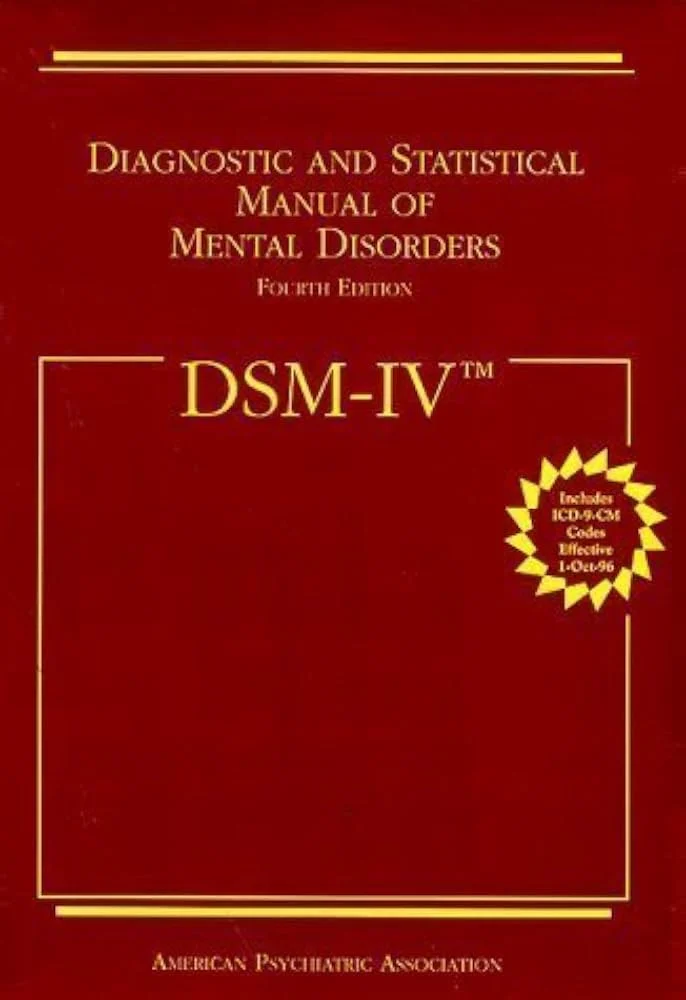
- In 1994, DSM-IV divided ADHD into three subtypes:
|
Predominantly Inattentive Type |
|
Predominantly Hyperactive-Impulsive Type |
|
Combined Type |
This structure strongly shaped ADHD practice for almost two decades.
It also helped increase recognition of people whose presentation was mainly inattentive.
But another problem emerged.
Longitudinal studies showed that people frequently moved between these supposed “types”.
A hyperactive child might become a less visibly hyperactive adult while continuing to experience major problems with impulsivity, organisation and attention.
Someone might meet combined criteria at one stage of life but predominantly inattentive criteria several years later.
The categories were therefore not necessarily permanent biological subtypes.
They were better understood as current clinical presentations.
That realisation would eventually be reflected in DSM-5.
- The Great Conceptual Shift: ADHD Becomes a Lifespan Disorder
Perhaps the largest transformation in ADHD diagnosis has been the recognition that it does not simply disappear when childhood ends.
For much of the twentieth century, ADHD was essentially considered a childhood behavioural disorder.
Adults were rarely assessed.
When formerly hyperactive children became less visibly restless, they were often assumed to have grown out of the condition.
Long-term research told a different story.
For many people, the phenotype changes rather than disappears.
Running around a classroom may become:
• inner restlessness,
• difficulty remaining in lengthy meetings,
• constant task-switching,
• impatience,
• excessive talking,
• impulsive decisions,
• rapid changes of interest,
or a persistent drive to remain occupied.
Childhood failures to complete homework may evolve into:
• unfinished administrative tasks,
• missed deadlines,
• chronic procrastination,
• poor financial organisation,
• difficulty managing correspondence,
• late tax returns,
• forgotten appointments,
or repeated periods of occupational overwhelm.
Modern ADHD diagnosis therefore increasingly distinguishes developmental change in symptoms from recovery from the disorder.
DSM-5: ADHD Officially Enters the Neurodevelopmental Era
DSM-5, published in 2013, made several changes reflecting this newer understanding.
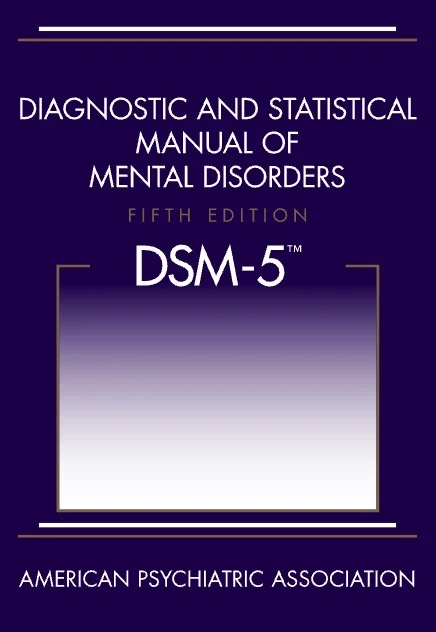
ADHD was placed within the chapter of neurodevelopmental disorders.
For adults aged 17 and above, the number of symptoms required within a symptom domain fell from six to five.
Examples of adult manifestations were incorporated into the criteria.
The required age at which several symptoms must have been present changed from before age seven to before age twelve.
“Subtypes” became presentations.
And ADHD could now formally be diagnosed alongside autism spectrum disorder, something DSM-IV had not permitted.
These apparently technical changes represented a much larger philosophical shift.
ADHD had become explicitly conceptualised as a disorder capable of changing its outward appearance across development.
ICD-11: International Diagnostic Systems Converge
Historically, the American DSM concept of ADHD and the World Health Organization's ICD concept of hyperkinetic disorder were not identical.
ICD-10 hyperkinetic disorder generally represented a narrower and more restrictive phenotype.
ICD-11 has substantially narrowed this divide.
ADHD is now formally classified in ICD-11 as Attention Deficit Hyperactivity Disorder, with predominantly inattentive, predominantly hyperactive-impulsive and combined presentations.
WHO's 2024 ICD-11 Clinical Descriptions and Diagnostic Requirements also embrace a much more explicit lifespan approach, recognising that neurodevelopmental conditions can manifest differently in childhood, adolescence and later adulthood.
The international conceptualisation of ADHD has consequently become much more aligned than it was only a generation ago.
ADHD Today: Not Simply an Attention Deficit
One irony of the modern diagnosis is that its name is probably too narrow.
People with ADHD do not necessarily have a simple shortage of attention.
Many can concentrate extremely intensely under particular circumstances.
The difficulty is often better understood as inconsistent regulation of attention according to task demands.
Attention may be excellent when something is
• novel,
• urgent,
• rewarding,
• personally meaningful,
• competitive,
• emotionally engaging,
or intellectually stimulating.
The same individual may find an objectively easy but repetitive administrative task disproportionately difficult.
- This explains one of ADHD's most confusing features:
“How can somebody concentrate for six hours on something they love but cannot complete a ten-minute form?”
The modern answer is that ADHD is not synonymous with an inability to concentrate.
It involves abnormalities in the regulation, allocation and persistence of attention, motivation and cognitive control.
From Hyperactivity to Executive Dysfunction
Modern clinical thinking has also expanded far beyond the traditional 18 DSM symptoms.
Research frequently identifies difficulties involving
• working memory,
• planning,
• prospective memory,
• response inhibition,
• organisation,
• task initiation,
• time perception,
• delay tolerance,
• reward processing,
• effort allocation,
and regulation of attention.
These are often grouped under the broad concept of executive dysfunction.
Executive-function impairment is not identical in every person with ADHD, nor is executive dysfunction specific to ADHD. Nevertheless, it offers a much richer explanation of everyday disability than the stereotype of someone who simply “cannot pay attention”.
A person may therefore function superbly as a surgeon, entrepreneur, artist or engineer during highly stimulating work yet repeatedly fail to submit invoices, answer letters or remember routine appointments.
The inconsistency itself can be clinically informative.
Emotional Dysregulation Returns to the Conversation
Another important modern development concerns emotion.
Emotional impulsivity, irritability, rapidly escalating frustration, rejection sensitivity and difficulty recovering from strong emotional states are frequently reported by people with ADHD.
Yet emotional dysregulation is not currently one of the defining DSM core symptom domains.
This has produced an interesting historical circularity.
Some early descriptions of ADHD-like children included striking emotional instability. Later operational diagnostic systems narrowed ADHD towards measurable symptoms of inattention and hyperactivity-impulsivity.
Contemporary research has brought emotional self-regulation back into focus.
- The current position requires nuance: emotional dysregulation is clinically important and common, but it is not specific enough to diagnose ADHD by itself.
The Recognition of ADHD in Women and Girls
Few areas demonstrate the changing nature of ADHD diagnosis more clearly than the recognition of female ADHD.
Historically, ADHD research and referral pathways disproportionately identified boys with conspicuous hyperactivity and behavioural disruption.
Girls were more likely to present with:
- inattention,
- daydreaming,
- disorganisation,
- internal restlessness,
- anxiety,
- perfectionistic compensation,
- emotional dysregulation,
Consequently, many were never referred.
NICE now explicitly warns that ADHD is under-recognised in girls and women and that women may instead receive diagnoses of other psychiatric or neurodevelopmental conditions.
Recent research continues to investigate why females are diagnosed later and less often, considering biological differences alongside diagnostic thresholds, referral bias, compensatory behaviour and sociocultural expectations.
This does not mean that women have a separate disease called “female ADHD”.
Rather, modern practice is becoming better at recognising different ways in which the same neurodevelopmental liability can become visible—or remain hidden.
Masking, Compensation and the High-Functioning Patient
Earlier diagnostic thinking often assumed that severe ADHD should produce obvious failure.
Modern practice increasingly recognises compensation.
Intelligence, family structure, anxiety, perfectionism, occupational selection and sheer effort can conceal impairment for years.
Someone may appear extremely successful while maintaining that success through
- working far longer than colleagues,
- constant last-minute deadlines,
- multiple calendars and alarms,
- excessive checking,
- sleep sacrifice,
- reliance on urgency,
- fear-driven perfectionism,
or delegation of almost all administrative tasks.
This raises an important diagnostic principle:
|
Achievement does not exclude ADHD. |
- The clinically relevant question is often not simply:
|
“What has this person achieved?” |
- but also:
|
“What has it cost them to achieve it?” |
Adult Diagnosis and the Problem of Childhood Evidence
- Adult ADHD assessment creates a problem that childhood psychiatry rarely faces: clinicians are attempting to reconstruct a neurodevelopmental history several decades later.
School reports may no longer exist.
Parents may have died.
Childhood memories may be incomplete.
Some adults grew up in environments where symptoms were contained by rigid routines or extensive parental supervision.
Modern diagnosis therefore relies upon the integration of multiple sources rather than a single test.
- A high-quality adult assessment may consider:
- current symptoms,
- developmental history,
- childhood behaviour,
- education,
- occupational functioning,
- relationships,
- driving,
- finances,
- substance use,
- psychiatric history,
- physical health,
- family history,
- rating scales,
and collateral information where available.
NICE remains explicit that ADHD should not be diagnosed solely from rating scales or observational measures. Diagnosis requires a full clinical and psychosocial assessment, developmental and psychiatric history, consideration of functioning across settings and appropriate differential diagnosis.
This remains one of the most important safeguards in modern ADHD practice.
No Blood Test, Brain Scan or Genetic Test Diagnoses ADHD
Modern neuroscience has transformed our understanding of ADHD, but it has also clarified the limitations of biological testing.
Large-scale studies demonstrate that ADHD is strongly influenced by genetics.
- It is polygenic: thousands of common genetic variants each contribute tiny amounts of risk, while rarer variants can also contribute in some individuals.
ADHD therefore does not have a single “ADHD gene”.
Contemporary reviews describe a predominantly genetic aetiology involving both common and rare variants, alongside environmental and developmental influences whose causal relationships can be complex.
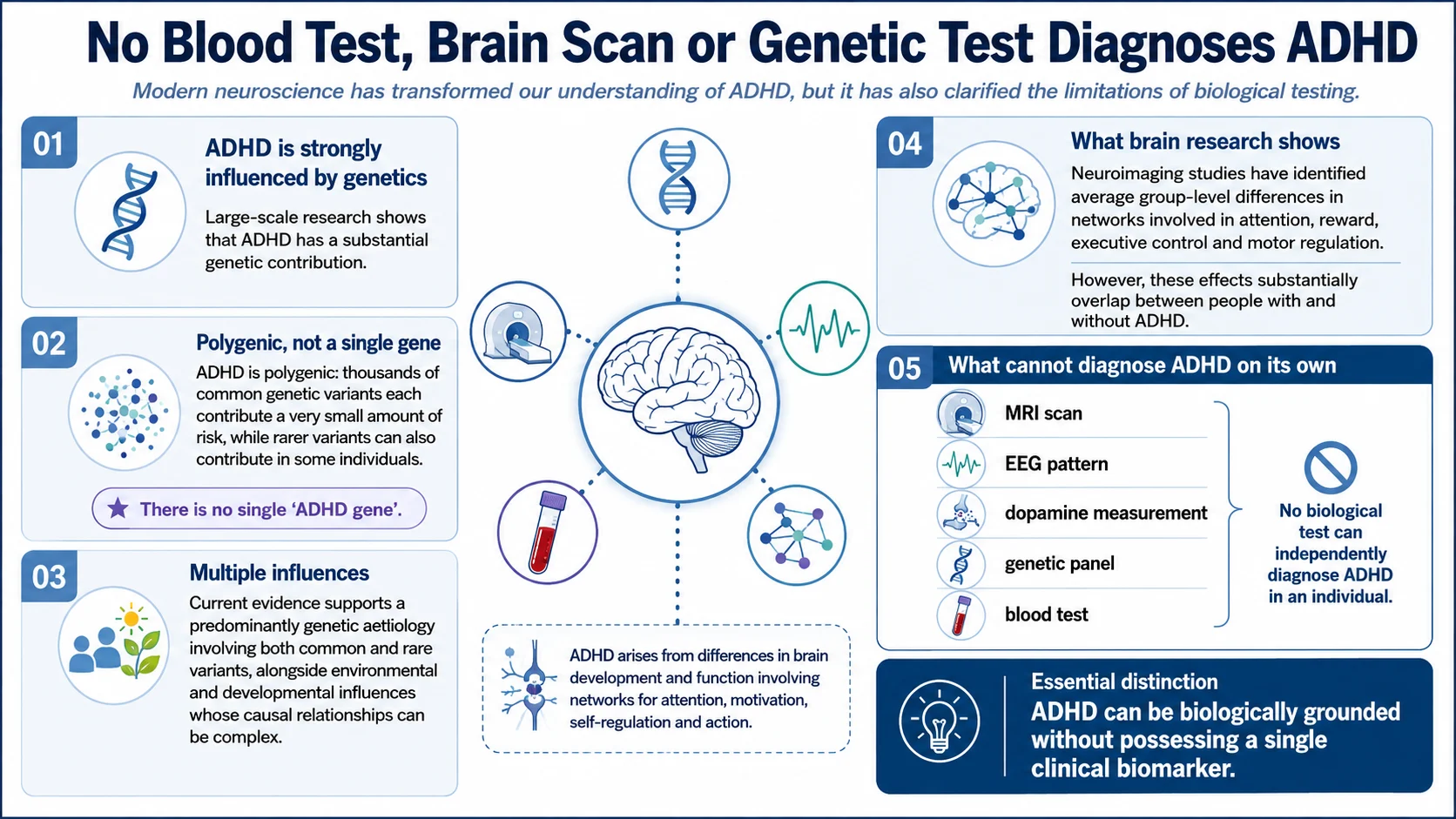
Neuroimaging studies have identified average group-level differences involving networks implicated in attention, reward, executive control and motor regulation.
But these effects substantially overlap between people with and without ADHD.
- Consequently:
|
there is currently no MRI scan, EEG pattern, dopamine measurement, genetic panel or blood test that can independently diagnose ADHD in an individual. |
That distinction is essential.
ADHD can be biologically grounded without possessing a single clinical biomarker.
Digital Testing: Useful Adjunct, Not Diagnostic Oracle
Technology is nevertheless beginning to enter ADHD assessment.
Computerised measures can quantify aspects of attention, impulsivity and activity.
In England, NICE now includes QbTest as an option to help diagnose ADHD in people aged 6–17 years.
The wording matters.
It can help diagnosis.
It does not replace clinical diagnosis.
A person can perform poorly on attention testing for numerous reasons, including sleep deprivation, anxiety, depression, medication effects or other neurodevelopmental conditions.
Conversely, an intelligent or highly motivated person with ADHD may perform well during a short, novel, highly structured computer task.
The future of diagnosis is therefore unlikely to involve one machine giving a simple yes-or-no answer.
More plausibly, digital measurements will become additional pieces of evidence within a multimodal assessment.
ADHD Rarely Exists in Isolation
Another profound change in thinking has been the move away from viewing ADHD as an isolated disorder.
- Modern ADHD clinics routinely consider co-occurring:
- autism,
- specific learning disorders,
- developmental coordination disorder,
- tic disorders,
- anxiety,
- depression,
- bipolar disorder,
- sleep disorders,
- eating disorders,
- personality pathology,
and substance-use disorders.
NICE specifically identifies higher ADHD prevalence among several groups, including people with other neurodevelopmental disorders, mental-health conditions, histories of substance misuse and involvement in the criminal justice system.
DSM-5's decision to permit simultaneous ADHD and autism diagnoses was particularly significant.
Previously, clinicians were effectively forced to choose between diagnoses that we now know frequently coexist.
- The modern question is therefore increasingly:
|
“What combination of neurodevelopmental and psychiatric characteristics best explains this person?” |
- rather than:
|
“Which single diagnostic box do they fit into?” |
From Categories Towards Dimensions
- ADHD is still diagnosed categorically: an individual either meets formal diagnostic criteria or does not.
Biologically, however, many ADHD-related traits appear to exist on a continuum.
Attention span, impulsiveness, activity, organisation and working memory vary throughout the population.
There is no obvious biological cliff at which “normal attention” suddenly becomes “ADHD”.
The diagnostic threshold exists because medicine must determine when symptoms have become sufficiently persistent, developmentally inappropriate and impairing to justify a clinical diagnosis.
This helps explain why impairment is essential.
Everybody is forgetful.
Everybody procrastinates.
Everybody becomes distracted.
ADHD is not the presence of ordinary human characteristics.
It is a persistent developmental pattern in which these characteristics occur with sufficient frequency, severity and cross-situational impact to interfere with functioning or development.
WHO's contemporary ICD-11 framework increasingly acknowledges dimensional thinking throughout psychiatric classification while retaining clinically useful diagnoses.
The Rise in Adult Diagnosis: Better Recognition or Overdiagnosis?
The dramatic growth in ADHD assessment has inevitably created controversy.
Some argue that the condition is now being overdiagnosed.
Others argue that medicine is correcting decades of substantial under-recognition, particularly among adults and women.
Both concerns deserve consideration.
Increasing public awareness, social media, reduced stigma and greater availability of specialist services have undoubtedly brought people forward who would never previously have been assessed.
At the same time, an ADHD diagnosis should not be reduced to identifying with online descriptions such as procrastination, forgetfulness or hyperfocus.
- Many conditions can produce ADHD-like symptoms, including:
- chronic sleep deprivation,
- anxiety,
- depression,
- post-traumatic symptoms,
- substance use,
- bipolar disorder,
- thyroid disease,
- medication effects,
and other neurodevelopmental disorders.
The answer to concerns about overdiagnosis is therefore not to return to the era in which ADHD was routinely missed.
It is to improve diagnostic quality.
Does Adult-Onset ADHD Exist?
One of the most interesting unresolved questions concerns people who appear to develop ADHD-like symptoms only in adulthood.
Several longitudinal studies have identified individuals apparently meeting adult ADHD criteria without obvious childhood ADHD.
This generated proposals for an “adult-onset ADHD” phenotype.
The interpretation remains controversial.
- Possible explanations include:
- poor retrospective recall,
- subthreshold childhood symptoms,
increasing environmental demands exposing previously compensated difficulties,
- other psychiatric disorders,
- substance use,
- sleep disorders,
or genuinely different developmental pathways.
Current major diagnostic systems continue to conceptualise ADHD as neurodevelopmental, requiring evidence that symptoms were present during childhood.
Abrupt new onset of significant attention problems in adulthood should therefore prompt careful consideration of alternative explanations. ICD-11 specifically cautions that abrupt hyperactive behaviour emerging in adolescence or adulthood may suggest another psychiatric or medical condition.
ADHD in Older Adults: The Next Frontier
The lifespan story is still incomplete.
Research on ADHD has historically focused on children, and even adult research has disproportionately involved younger and middle-aged adults.
We now have increasing numbers of people being assessed in their 50s, 60s and 70s.
This creates new diagnostic challenges.
- Clinicians must distinguish longstanding ADHD from:
- normal cognitive ageing,
- menopause-related cognitive change,
- sleep disturbance,
- depression,
- medication effects,
- vascular disease,
- mild cognitive impairment,
and early neurodegenerative illness.
At the same time, retirement can reveal previously hidden ADHD.
A person who functioned well for decades within the externally imposed routines of employment may suddenly struggle once those structures disappear.
The emerging field of later-life ADHD is therefore likely to become increasingly important.
The Modern Model: A Developmental Disorder of Self-Regulation
The modern concept of ADHD is considerably broader than the name suggests.
It can be understood as a developmental disorder affecting systems involved in
|
attention regulation |
|
inhibitory control |
|
motivation and reward processing |
|
working memory |
|
organisation |
|
temporal processing |
|
activity regulation |
- and, in many individuals,
emotional self-regulation.
None of these mechanisms alone defines ADHD.
Different people reach the same clinical diagnosis through somewhat different combinations of vulnerabilities.
This is why contemporary research increasingly describes ADHD as heterogeneous. Modern reviews identify variation not only in symptom presentation but also in cognitive profile, co-occurring disorders, genetics and subtle structural and functional brain differences.
There may ultimately prove to be multiple biological routes to what we currently call ADHD.
Where Diagnosis May Be Heading
The next transformation in ADHD diagnosis is unlikely to be another simple renaming of the disorder.
It is more likely to involve progressively more individualised characterisation.
- Future assessment may combine:
- clinical developmental history,
- digital behavioural measurement,
- longitudinal real-world data,
- sleep and circadian information,
- cognitive testing,
- genomic information,
- neuroimaging research,
- wearable-device data,
and sophisticated computational modelling.
Artificial intelligence may eventually help detect patterns across these sources that human clinicians cannot easily integrate.
But significant caution is necessary.
An algorithm trained on historically biased clinical populations could reproduce those same biases—for example, systematically under-recognising women or culturally different presentations.
The goal should therefore not be to replace clinical reasoning with technology.
It should be to make clinical reasoning better informed.
From “What Is Wrong With This Child?” to “How Does This Brain Function?”
Perhaps the most important change in the history of ADHD is philosophical.
The earliest clinical descriptions focused heavily upon the inconvenience the child's behaviour caused other people.
Modern assessment increasingly asks about the individual's own functioning and experience.
Why does starting an ordinary task feel disproportionately difficult?
Why does concentration fluctuate so dramatically?
Why does urgency suddenly unlock hours of productivity?
Why does maintaining apparently normal functioning require extraordinary effort?
Why can someone understand perfectly what needs doing yet repeatedly fail to translate intention into action?
These questions move ADHD away from a simplistic disorder of bad behaviour and towards a disorder involving the regulation of cognition, motivation and behaviour across time.
What Has Not Changed
Despite extraordinary scientific advances, one fundamental aspect of diagnosis has remained remarkably constant.
ADHD is still diagnosed primarily by understanding the person's developmental story.
There is no single laboratory result.
There is no diagnostic brain scan.
There is no questionnaire score that proves ADHD.
Good diagnosis remains an exercise in clinical synthesis.
The clinician must establish that there is a persistent pattern of relevant symptoms, that those symptoms arose developmentally, occur across important settings, cause meaningful impairment and are not better explained by another condition.
In the UK, NICE continues to emphasise precisely this comprehensive approach.
A Diagnosis That Continues to Evolve
The journey from “defective moral control” to minimal brain dysfunction, from the hyperactive child to attention deficit disorder, from ADD to ADHD, and from childhood disorder to lifelong neurodevelopmental condition illustrates how radically medical understanding can change.
ADHD has not become broader simply because diagnostic fashions changed.
Research progressively revealed features that older concepts failed to explain
- children who were inattentive but not hyperactive;
- adults whose hyperactivity became internal restlessness;
- women whose difficulties were hidden rather than disruptive;
high-achieving people whose success masked enormous compensatory effort;
- people with simultaneous ADHD and autism;
- families showing strong intergenerational transmission;
and adults whose greatest disabilities involved time, organisation, motivation and emotional regulation rather than visible hyperactivity.
The modern diagnosis is therefore both more sophisticated and more demanding than the historical stereotype.
It requires clinicians to see ADHD not merely as a collection of symptoms, but as a developmental pattern unfolding across a person's life.
And the story is not finished.
The future may eventually divide what we currently call ADHD into biologically or cognitively meaningful subgroups. Objective measures may strengthen assessment. Genetics may help explain individual risk. Digital phenotyping may reveal patterns invisible during a clinic appointment.
But the central insight developed over more than a century is unlikely to disappear:
ADHD is not simply a problem of attention, and it is certainly not a failure of intelligence, character or effort. It is a complex variation in neurodevelopment that can alter how an individual regulates attention, action, motivation and behaviour across the lifespan.
The history of ADHD is therefore more than the history of a diagnosis.
It is the history of medicine gradually learning to distinguish difficulty doing something from unwillingness to do it.
Selected Current and Historical References
Still GF. The Goulstonian Lectures on some abnormal psychical conditions in children. Lancet. 1902.
Bradley C. The behaviour of children receiving Benzedrine. American Journal of Psychiatry. 1937.
Lange KW, Reichl S, Lange KM, Tucha L, Tucha O. The history of attention deficit hyperactivity disorder. Attention Deficit and Hyperactivity Disorders. 2010.
- Faraone SV et al. The World Federation of ADHD International Consensus Statement: 208 evidence-based conclusions about the disorder. Neuroscience & Biobehavioral Reviews. 2021.
Posner J, Polanczyk GV, Sonuga-Barke E. Attention-deficit hyperactivity disorder. Lancet. 2020.
Cortese S et al. Attention-deficit/hyperactivity disorder. Nature Reviews Disease Primers. 2024.
Martin J. Why are females less likely to be diagnosed with ADHD in childhood than males? Lancet Psychiatry. 2024.
World Health Organization. Clinical Descriptions and Diagnostic Requirements for ICD-11 Mental, Behavioural and Neurodevelopmental Disorders. 2024.
- National Institute for Health and Care Excellence. NG87: Attention deficit hyperactivity disorder: diagnosis and management. Guideline reviewed May 2025.