
ADHD is a lifelong neurodevelopmental condition. Although it is often first recognised in childhood, many people are not diagnosed until adulthood, particularly those whose difficulties were masked by intelligence, structure, supportive families, anxiety, perfectionism, or highly developed coping strategies.
By adulthood, ADHD may be less visible as overt hyperactivity and more apparent through persistent problems with concentration, organisation, time management, task initiation, working memory, impulsivity, emotional regulation and maintaining consistent performance.
For adults who meet diagnostic criteria for ADHD and for whom medication is clinically appropriate, pharmacological treatment can make a substantial difference. Medication does not remove ADHD, change someone's personality or automatically solve every difficulty associated with the condition. Its purpose is to reduce core symptoms sufficiently to make everyday functioning more manageable.
One of the most established effects of ADHD medication is improvement in the ability to direct and sustain attention.
Adults with ADHD may understand perfectly well what they need to do but struggle to keep their attention engaged long enough to complete it. They may repeatedly move between tasks, become distracted by conversations, notifications or their own thoughts, or find routine activities disproportionately difficult to sustain.
Effective treatment can reduce this attentional instability. People may find it easier to remain with a task, follow conversations, read for longer periods, complete administrative work and return to an activity after an interruption.
The aim is not excessive or unnaturally intense concentration. Good treatment should generally provide better control over where attention is directed.
ADHD is not simply a problem of knowing what needs to be done. A major difficulty can be converting intention into action.
Someone may genuinely intend to complete a report, answer an email, make an appointment or organise paperwork, yet repeatedly postpone starting. Tasks that are boring, repetitive, complicated or have no immediate reward can be particularly difficult.
Medication may reduce this barrier to task initiation and improve persistence once a task has begun. For some adults, one of the most noticeable changes is that ordinary activities require less internal effort.
This can reduce the repeated cycle of procrastination, deadline pressure, last-minute bursts of activity and subsequent exhaustion.
Adults with ADHD frequently describe their thoughts as crowded, rapidly shifting or difficult to prioritise.
External distractions may compete constantly for attention, while internally generated thoughts can be equally disruptive. An individual may begin one activity and suddenly remember several unrelated tasks, concerns or ideas, each of which feels immediately important.
When medication is effective, people sometimes describe a greater sense of mental organisation or "quietness". This does not mean that thoughts disappear. Rather, competing information may become easier to filter and prioritise.
The person may be better able to decide: this is what I am doing now; the other things can wait.
Working memory allows us to hold information in mind while using it. It is closely linked to many everyday executive functions and is frequently impaired in ADHD.
Difficulties can include losing track of instructions, forgetting why one entered a room, missing appointments, overlooking parts of a task, misplacing belongings or beginning something and becoming distracted before completing it.
Medication is not a general memory enhancer, and it will not prevent ordinary forgetting. However, by improving attention and reducing interference from distractions, treatment can make information more likely to be registered and acted upon.
This can make calendars, reminders, lists and organisational systems considerably more effective because the person is better able to use them consistently.
ADHD can affect the ability to create a sufficient pause between an impulse and an action.
In adulthood this may appear as interrupting conversations, making rapid decisions, impulsive spending, changing jobs unexpectedly, reacting immediately during disagreements, driving too quickly or pursuing rewarding activities despite longer-term consequences.
Medication may strengthen inhibitory control, giving an individual more opportunity to consider an action before responding.
This does not remove spontaneity or personality. The aim is to increase choice and control.
Hyperactivity in adults does not always involve obvious physical overactivity.
It may present as internal restlessness, difficulty relaxing, constant activity, excessive talking, fidgeting, impatience or an uncomfortable sense that something must always be happening.
Some people consequently fill almost every available moment with work, projects, exercise, social activity or stimulation.
Appropriate treatment may reduce this internal pressure and make it easier to regulate activity rather than constantly seeking stimulation.
Emotional dysregulation is not itself a core DSM-5 diagnostic criterion for ADHD, but difficulties regulating emotional responses are commonly reported by adults with the condition.
These can include irritability, frustration intolerance, rapid emotional reactions and difficulty recovering after setbacks or criticism.
For some people, successful treatment of the underlying ADHD reduces the frequency or intensity of these reactions, particularly when emotional episodes are being driven by cognitive overload, impulsivity or repeated frustration.
Medication is not a treatment for every emotional difficulty, however, and significant anxiety, depression, trauma or other mental health conditions require assessment in their own right.
The purpose of ADHD treatment is not merely to produce a subjective feeling of concentration.
Clinicians should look for meaningful improvement in everyday functioning. Depending upon the individual, this might include greater consistency at work, improved academic productivity, fewer forgotten commitments, better household organisation, safer driving, improved financial management or less conflict within relationships.
A useful question during treatment is therefore not simply:
"Can I feel the medication?"
but:
"Is my life becoming easier to manage?"
Sometimes the most important improvements are noticed by other people before the person taking medication fully recognises them.
Medication is usually most effective when viewed as one component of broader ADHD management.
Sleep, exercise, environmental structure, treatment of coexisting conditions, psychological interventions, coaching where appropriate, occupational adjustments and practical executive-function strategies can all remain important.
Medication may, however, make these strategies easier to implement.
A planner cannot help very much if it is repeatedly forgotten. A task system has limited value if every task is postponed. Psychological strategies are harder to use when attention repeatedly shifts elsewhere.
Reducing core ADHD symptoms can therefore create the cognitive space required to use other interventions more effectively.
ADHD medication is not appropriate for everyone, and there is no single medication or dose that is right for every person.
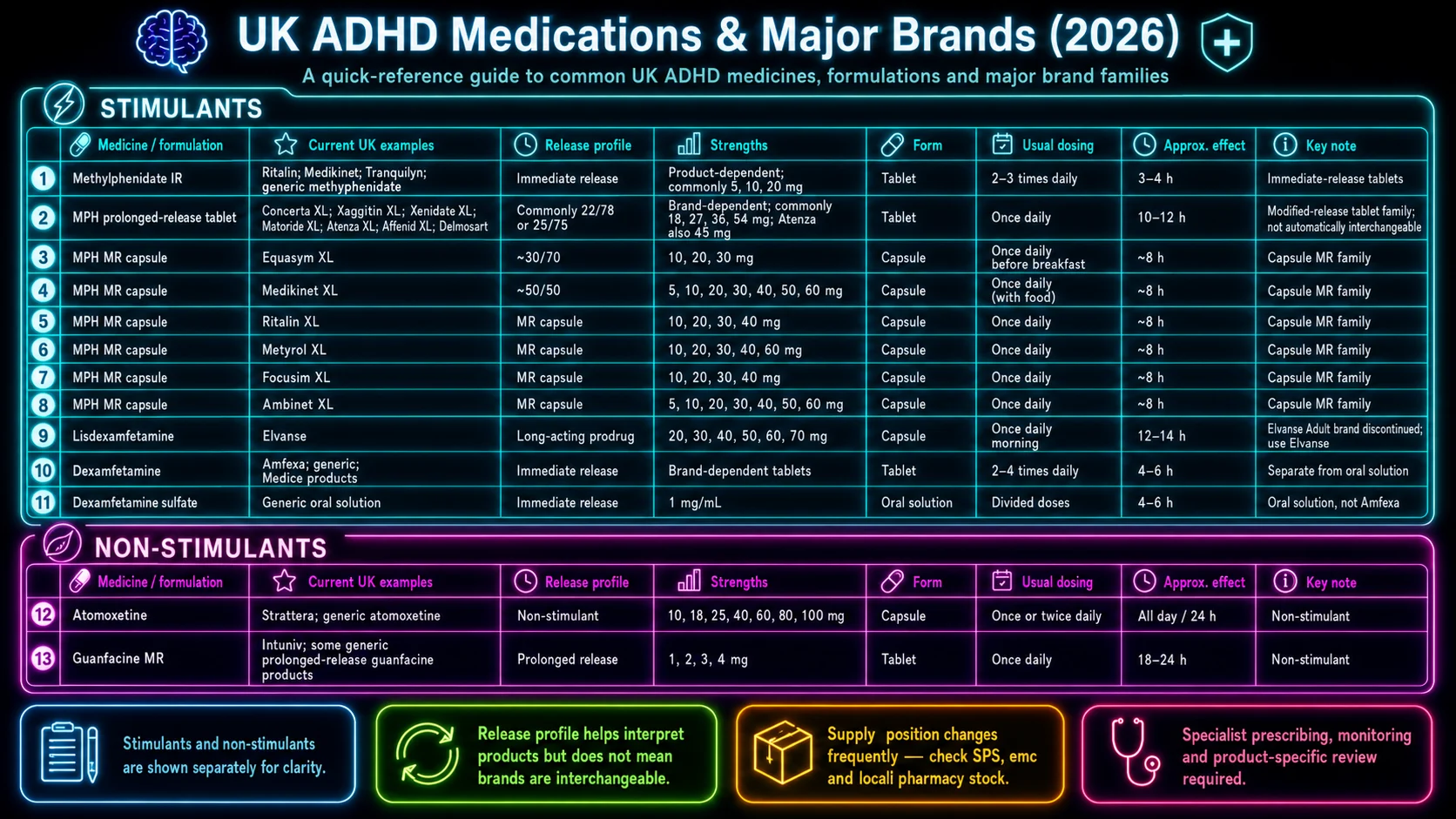
In the UK, stimulant medications such as lisdexamfetamine and methylphenidate are commonly used in adults, while non-stimulant options include atomoxetine, with other treatments considered in particular clinical circumstances.
Medication should be initiated and adjusted according to recognised clinical guidance, taking account of medical history, mental health, cardiovascular health, other medications, substance-use history and the individual's treatment priorities.
Blood pressure, pulse, weight, effectiveness and adverse effects should be monitored. Dose optimisation involves finding the lowest appropriate dose that provides worthwhile functional improvement with acceptable side effects.
Common adverse effects can include reduced appetite, insomnia, dry mouth, headache, increased pulse or blood pressure, and occasionally increased anxiety or irritability. These require appropriate monitoring rather than assuming that every symptom represents a reason to stop treatment.
A common concern is that medication will alter personality, reduce creativity or make someone feel emotionally "flat".
That is not the objective of ADHD treatment.
When medication and dose are appropriate, the person should still feel like themselves. Creativity, humour, enthusiasm, curiosity and personality should remain intact.
Treatment is intended to improve the ability to regulate attention, behaviour and activity — not suppress individuality.
If someone feels persistently unlike themselves, emotionally blunted, excessively stimulated or uncomfortable on medication, the treatment should be reviewed.
ADHD is not simply poor motivation, inadequate discipline or an inability to tolerate modern life. It is a recognised neurodevelopmental disorder associated with measurable impairment across education, employment, relationships, health and everyday functioning.
Medication is among the most extensively studied treatments for ADHD and, for many adults, produces clinically meaningful reductions in core symptoms.
Not everybody chooses medication, not everybody can take it, and not everyone responds equally well. Treatment decisions should therefore be collaborative and based upon the individual's symptoms, impairment, physical and mental health, preferences and treatment goals.
For someone who has spent decades compensating for untreated ADHD, effective treatment can nevertheless be significant.
The change is often less dramatic than suddenly becoming a different person. It may instead be the cumulative effect of starting tasks more easily, finishing more of what was started, listening more consistently, remembering more of what matters, reacting less impulsively and needing considerably less effort simply to keep everyday life organised.
That is ultimately the purpose of treatment: not to create a different person, but to reduce the unnecessary impairment caused by ADHD and allow the individual to function more consistently as themselves.
Quick links - ADHD medication leaflets
ADHD medications fall broadly into two groups: stimulants and non-stimulants. In the UK, stimulant medication is usually considered first because it has the strongest evidence for reducing the core symptoms of ADHD, works relatively quickly and benefits a substantial proportion of adults.
Current NICE guidance recommends lisdexamfetamine or methylphenidate as first-line pharmacological treatments for adults with ADHD. If an adequate trial of one stimulant class is unsuccessful, the other is usually considered. Atomoxetine is the principal non-stimulant alternative for adults who cannot tolerate stimulant medication or who have not responded adequately to appropriate trials of both methylphenidate and lisdexamfetamine.
The choice of medication is individual. There is no single ADHD medication that is inherently "best", and response can vary considerably between people.
The term stimulant can sometimes sound counterintuitive when treating people who may already feel restless or mentally overactive. However, these medicines do not simply "stimulate" the whole brain.
They primarily influence signalling involving dopamine and noradrenaline, particularly within neural networks involved in attention, executive control, motivation, working memory and behavioural inhibition.
When appropriately prescribed, the intended result is not excitement or excessive stimulation. It is improved regulation of attention and behaviour.
The two main stimulant families used for ADHD in UK adults are:
methylphenidate-based medication
and
amphetamine-based medication, principally lisdexamfetamine and dexamfetamine.
Methylphenidate has been used to treat ADHD for many decades and remains one of the principal first-line treatments.
It primarily works by inhibiting the reuptake of dopamine and noradrenaline, increasing the availability of these neurotransmitters within relevant brain networks.
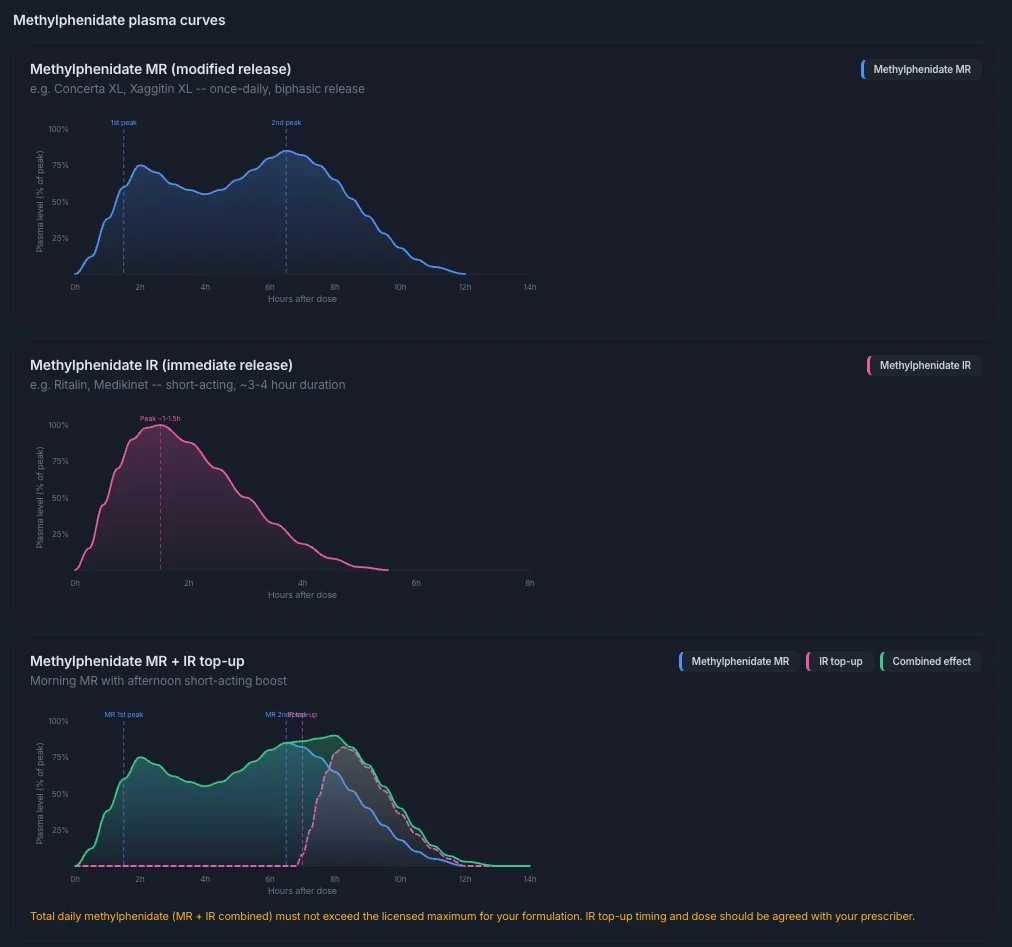
Methylphenidate is available in both immediate-release and modified-release formulations.
Examples available in the UK have included preparations such as:
Concerta XL, Xaggitin XL, Delmosart, Medikinet XL, Equasym XL, alongside immediate-release methylphenidate preparations.
Brand names and availability can change, and different modified-release preparations are not necessarily pharmacologically interchangeable. They may release different proportions of methylphenidate at different times of day, meaning that changing formulation can alter the clinical effect even when the total stated dose is similar.
Unlike antidepressants and many other psychiatric medications, stimulant effects are usually apparent on the day the medication is taken.
Immediate-release methylphenidate generally begins acting relatively quickly and lasts for several hours. Modified-release preparations are designed to provide a longer therapeutic window, often covering much of the working or educational day.
The exact duration varies considerably between individuals and between formulations.
When effective, methylphenidate may improve:
attention and concentration;
resistance to distraction;
task initiation and completion;
working-memory performance;
organisation and prioritisation;
impulse control;
restlessness and excessive activity;
and the ability to regulate attention consistently across the day.
Some people also report secondary improvements in emotional regulation because they feel less cognitively overloaded and are better able to pause before reacting.
Common adverse effects can include:
reduced appetite;
difficulty sleeping, particularly if taken too late;
dry mouth;
headache;
increased pulse;
increased blood pressure;
nausea or gastrointestinal discomfort;
increased sweating;
and, in some individuals, anxiety, irritability or a feeling of being excessively stimulated.
These effects are often dose-dependent and may be addressed by changing dose, timing or formulation rather than automatically abandoning the medication.
Amphetamine medications also increase dopamine and noradrenaline signalling but do so through somewhat different pharmacological mechanisms from methylphenidate.
The main amphetamine medications used for adult ADHD in the UK are lisdexamfetamine and dexamfetamine.
Lisdexamfetamine is one of the two principal first-line medications recommended by NICE for adults with ADHD.
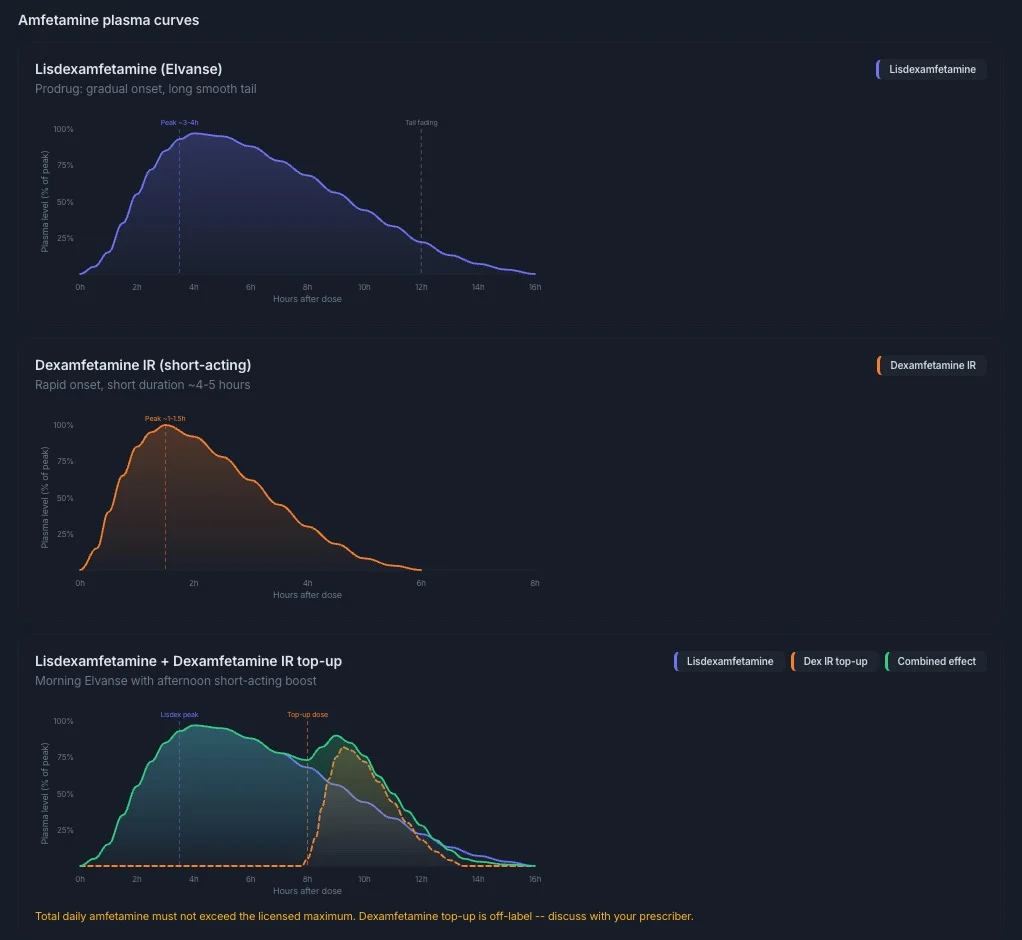
It is a prodrug of dexamfetamine. This means that lisdexamfetamine itself is relatively inactive and must first be converted within the body into active dexamfetamine.
This conversion produces a relatively gradual onset and prolonged clinical effect compared with conventional immediate-release dexamfetamine.
For many people this results in a smoother therapeutic profile across the day.
When effective, lisdexamfetamine may improve:
sustained attention;
distractibility;
task initiation;
task persistence;
impulse control;
restlessness;
working efficiency;
and the ability to organise and regulate behaviour.
Its longer duration can be particularly useful for adults whose responsibilities extend beyond a conventional working or educational day.
Potential adverse effects include:
reduced appetite;
weight loss;
dry mouth;
insomnia;
headache;
increased pulse or blood pressure;
sweating;
jaw tension;
gastrointestinal symptoms;
and occasionally anxiety, irritability or excessive stimulation.
The aim of titration is therefore not simply to increase the dose until symptoms disappear. It is to identify the dose that provides the best balance between functional improvement and tolerability.
Dexamfetamine is the active amphetamine produced when lisdexamfetamine is metabolised.
Unlike lisdexamfetamine, dexamfetamine itself does not require conversion into an active compound and therefore has a more immediate and shorter-acting pharmacological profile.
In adults, NICE recommends considering dexamfetamine when a person responds to lisdexamfetamine but cannot tolerate its longer duration of effect.
Dexamfetamine can also have particular specialist uses where greater flexibility over the duration or timing of treatment is required.
A familiar UK brand is Amfexa, although generic preparations may also be prescribed.
Because it is shorter acting, it may require more than one dose during the day in some circumstances.
An important distinction is not simply which drug is used, but how quickly it is released.
Immediate-release stimulants act for a relatively short period and may sometimes be useful when:
a shorter period of treatment is required;
precise timing is important;
a person needs flexibility around work or study;
a modified-release preparation does not provide sufficient duration;
or a specialist is carefully tailoring treatment across the day.
Their disadvantages include the potential need for repeated dosing and greater fluctuations in medication concentration.
Longer-acting preparations are often convenient because a single morning dose may provide coverage over much of the day.
They may also produce smoother symptom control and reduce the practical difficulties of remembering additional doses.
For adults, medication choice should nevertheless be based on the person's actual daily demands rather than simply choosing the preparation with the longest possible duration.
Non-stimulants provide an important alternative for people who do not respond adequately to stimulant treatment, cannot tolerate it or have clinical circumstances in which a non-stimulant approach is preferable.
They generally have a slower onset of therapeutic action than stimulants.
Unlike stimulant medication, their effect is not usually experienced as a clearly defined period of action beginning shortly after each dose.
Atomoxetine is the principal non-stimulant ADHD medication recommended by NICE for adults.
It is a selective noradrenaline reuptake inhibitor and increases noradrenergic signalling, particularly within neural systems involved in attention and executive control.
For adults, NICE recommends atomoxetine when methylphenidate and lisdexamfetamine cannot be tolerated or when symptoms have not responded adequately to appropriate trials of both stimulant classes.
Atomoxetine works differently from stimulants.
Some improvement can emerge during the first few weeks, but the therapeutic effect generally develops progressively rather than immediately. A meaningful trial therefore needs to be sufficiently long and at an appropriate therapeutic dose before concluding that it has been ineffective.
Its full benefit may continue to develop over several weeks.
Atomoxetine:
is not a stimulant;
is not a controlled drug in the UK;
has substantially lower misuse and diversion potential than stimulant medication;
provides treatment across the day rather than a short medication window;
and may be particularly useful when stimulant treatment has been ineffective or poorly tolerated.
It may also be attractive where continuous symptom coverage is desirable.
Potential adverse effects include:
nausea or gastrointestinal discomfort;
reduced appetite;
dry mouth;
insomnia or occasionally tiredness;
increased pulse or blood pressure;
dizziness;
sweating;
and sexual adverse effects in some adults.
Mood changes and other psychiatric symptoms should also be monitored when clinically relevant.
It is incorrect to assume that atomoxetine is automatically preferable whenever anxiety is present. NICE recommends broadly the same medication choices for people with ADHD and coexisting anxiety disorders as for other people with ADHD. The overall clinical picture and individual response are more important than the presence of anxiety alone.
Guanfacine is an alpha-2A adrenergic receptor agonist. It acts differently from both stimulants and atomoxetine and influences noradrenergic signalling within the prefrontal cortex.
It can improve aspects of impulse control, hyperactivity and attention in ADHD.
However, an important distinction needs to be made between treatment in children and treatment in adults.
Guanfacine is not licensed for the treatment of adult ADHD in the UK, and NICE does not recommend routinely offering it to adults without advice from a tertiary ADHD service.
It therefore should not be presented as a standard second-line adult treatment alongside atomoxetine.
Where specialists consider its use in an adult, this is an individualised clinical decision requiring appropriate discussion and monitoring.
These include:
sleepiness or sedation;
fatigue;
dizziness;
reduced blood pressure;
slow heart rate;
and occasionally fainting.
Because guanfacine affects cardiovascular regulation, it should also not be stopped abruptly after established treatment without appropriate medical advice.
Clonidine is another alpha-2 adrenergic agonist and has some pharmacological similarities to guanfacine.
It is generally more sedating and has historically been used in selected cases involving ADHD alongside difficulties such as severe hyperactivity, sleep disturbance or tics.
It is not a routine adult ADHD medication in UK practice and should not be presented as a standard alternative to methylphenidate, lisdexamfetamine or atomoxetine.
NICE places specialist restrictions around using medications such as clonidine outside the usual recommended ADHD treatment pathway.
Potential adverse effects include:
sedation;
fatigue;
dizziness;
low blood pressure;
and a reduced heart rate.
Abrupt withdrawal can also produce rebound hypertension and should be avoided.
Occasionally a specialist may consider medications that do not form part of the standard licensed adult ADHD treatment pathway.
These should be clearly distinguished from established first- and second-line treatments.
Bupropion affects both noradrenaline and dopamine neurotransmission and has some evidence for reducing ADHD symptoms.
It is used more commonly for ADHD in some countries, particularly where ADHD and depression coexist.
However, bupropion is not licensed for ADHD in the UK, and in UK practice it should be regarded as an off-label specialist option rather than a routine alternative to atomoxetine or stimulants.
It also has important contraindications and risks, including lowering the seizure threshold in susceptible people.
Modafinil is a wakefulness-promoting medication principally used for disorders associated with excessive sleepiness.
Although it has been investigated as a possible ADHD treatment, it is not a standard treatment for adult ADHD in the UK and is not recommended by NICE as part of the routine ADHD medication pathway.
Its inclusion in general ADHD information should therefore be clearly labelled as an unusual specialist or off-label consideration rather than an established alternative.
ADHD pharmacotherapy does not routinely mean combining several different medications.
Most people are initially treated with one medication that is carefully titrated and optimised.
There are nevertheless circumstances in specialist practice where treatment may be adjusted across the day.
For example, NICE specifically recognises that clinicians may consider combining modified-release methylphenidate in the morning with immediate-release methylphenidate later in the day when a longer duration of therapeutic effect is required.
More complex combinations involving different drug classes require greater clinical justification and specialist oversight.
Adding guanfacine or clonidine to an adult stimulant purely as a routine night-time treatment should not be portrayed as standard UK practice.
Medication selection involves considerably more than deciding whether someone's ADHD is predominantly inattentive or hyperactive.
Important considerations include:
Response to ADHD medication is individual.
A person who derives relatively little benefit from methylphenidate may respond very well to lisdexamfetamine, and vice versa. Failure to respond to one stimulant does not mean that all stimulant medication will be ineffective.
Someone requiring symptom control from early morning until the evening may prefer a different formulation from someone requiring medication for a more limited part of the day.
Appetite suppression, sleep disturbance, cardiovascular effects, anxiety, irritability and other adverse effects can influence the choice of medication, dose and formulation.
Baseline assessment should consider cardiovascular history, blood pressure, pulse, weight and relevant medical conditions.
An ECG is not automatically required for every person before ADHD medication, although cardiac evaluation may be necessary where the history, examination, medication or clinical circumstances indicate it.
Clinicians should assess significant anxiety, depression, bipolar disorder, psychosis, eating disorders and other psychiatric conditions when planning treatment.
The presence of another psychiatric condition does not necessarily prohibit ADHD medication, but it may change the way treatment is introduced and monitored.
A history of substance misuse does not automatically mean that stimulant medication cannot be prescribed.
ADHD and substance-use disorders frequently coexist, and untreated ADHD can itself be associated with increased vulnerability to problematic substance use.
However, the risks of misuse, diversion and instability need careful assessment. Longer-acting preparations may sometimes be preferable, and NICE advises avoiding stimulant formulations that can be easily misused where there is a significant risk of diversion.
Medication decisions during pregnancy, when planning pregnancy or during breastfeeding require individual assessment of potential benefits and risks and should be discussed with an appropriately experienced clinician.
The person's own priorities matter.
Treatment should be a collaborative decision incorporating occupational demands, study, family responsibilities, driving, sleep, appetite, desired duration of effect and the person's experience of medication.
Successful ADHD treatment should not simply produce the sensation of "being medicated".
The purpose is meaningful functional improvement.
This may include:
being able to begin tasks more reliably;
remaining focused for longer;
completing more of what is started;
losing fewer belongings;
remembering appointments more consistently;
interrupting less;
making fewer impulsive decisions;
feeling less overwhelmed by competing demands;
managing work or study more efficiently;
or experiencing fewer ADHD-related difficulties within relationships and everyday life.
Medication should ideally make functioning easier and more consistent, while allowing the person to continue feeling like themselves.
Medication should be initiated and titrated by an appropriately qualified clinician and reviewed systematically.
Monitoring typically includes:
blood pressure and pulse;
weight and appetite;
sleep;
effect on ADHD symptoms;
functional improvement;
duration of benefit;
mental state;
and adverse effects.
The objective is not simply to reach a predetermined dose.
The optimal dose is the dose at which there is worthwhile improvement in ADHD symptoms and functioning with adverse effects that remain acceptable.
Some people respond well to relatively low doses, while others require doses towards the upper end of the licensed therapeutic range.
For most adults, the medication pathway can be understood relatively simply:
Methylphenidate or lisdexamfetamine
↓
If the first stimulant is insufficiently effective or poorly tolerated, consider an appropriate trial of the other stimulant class
↓
Atomoxetine where stimulants are not tolerated or adequate trials of both stimulant classes have not provided sufficient benefit
↓
Specialist or tertiary-service review where standard treatment has been unsuccessful or more complex/off-label pharmacological strategies are being considered.
There are important exceptions, and treatment should always be individualised.
Finding the most appropriate ADHD medication sometimes requires careful trial and adjustment.
Two people with apparently similar ADHD symptoms can respond very differently to the same medicine. A medication that produces an excellent response in one person may be ineffective or poorly tolerated in another.
The aim is therefore not simply to prescribe a stimulant or achieve a particular dose.
It is to identify a treatment that provides reliable, meaningful improvement in the person's real-world functioning while minimising unwanted effects.
For many adults, the final treatment plan is reached through careful titration, structured monitoring and collaboration between the individual and their clinician.